Essential Ways to Travel Mindfully in Spain
Updated May 19, 2026.
All images are courtesy of the Spain Less Traveled team, unless otherwise stated.

Alhambra gardens, Granada.
Travel in Spain has a way of inviting you to slow down—if you let it.
It’s easy to arrive with a list: cities to see, landmarks to check off, restaurants to try. But Spain isn’t a place that reveals itself fully at that pace. The real experience lives somewhere else—in long meals that stretch into conversation, in quiet mornings in a village plaza, in the rhythm of daily life that doesn’t bend to urgency.
Mindful travel in Spain isn’t about doing less for the sake of it. It’s about experiencing more by moving differently. Paying attention. Letting moments unfold instead of trying to control them.
In this blog post, we will share tips on how to travel mindfully in Spain and explore its amazing culture and history.
What is mindful travel?
Mindful travel is about being fully present in your experiences rather than rushing through them.
It means noticing where you are, how a place feels, how people interact, how your own pace shifts in response. It’s choosing depth over speed, awareness over efficiency.
In Spain, mindful travel often means aligning with the local rhythm rather than trying to optimize your time. The country doesn’t reward urgency in the same way others might. It rewards presence.
Why Spain is perfect for mindful travel
Some places require effort to slow down. Spain quietly insists on it.
Life here is built around connection—shared meals, time outdoors, conversation that isn’t rushed. Cities are walkable, neighborhoods are lived-in, and even in larger destinations, daily life unfolds at a human pace.

A plaza in Murcia. Take time to people watch, it’s worth it.
There’s also a depth of regional identity that encourages curiosity. The food, language, traditions, and landscapes shift as you move across the country. You’re not just visiting “Spain,” but many distinct cultures within it.
All of this makes it easier to travel with intention. You don’t have to manufacture a slower experience—it’s already there.
Be intentional with your itinerary
A full schedule doesn’t always lead to a full experience.
Rather than planning every hour, choose a few things each day that matter to you and allow the rest to remain open. Build in time to wander, to sit, to follow something unexpected.
“We recently traveled to Spain and had an amazing trip thanks to Karen! She helped us come up with an itinerary that filled our desire to have a fun, cultural vacation with some touristy stuff mixed in. Karen gave us very helpful recommendations about everything from basic stuff like driving in Spain to off the beaten path beach towns. Thank you Karen for helping make our family trip to Spain an amazing one!”
See more client testimonials here.
We would love to help plan your dream trip to Spain. Be sure to check out the professional Spain travel planning services we offer.
Do your research beforehand
If you want to travel mindfully, it's important that you understand the context in which you'll be visiting a place.
Before you travel to Spain, do your research and learn about the country's culture and history. This will help you better understand your experiences while you're there.
One way to do this is to read books or articles about Spain, or even watch films set in the country. You can also visit the website of the Spanish Tourist Board, which has a lot of information about different regions of the country.
Or even better, work with a Spain destination specialist such as Spain Less Traveled who can help you decide which regions to visit, how to do it logistically, and work with you to personalize your trip to Spain.
(Be sure to read up on more reasons why you should use a travel advisor to plan your trip to Spain!)

Spain has a rich culture and so much history. Taking time to understand it will enhance your trip to Spain!
Learn some basic phrases in Spanish
If you're going to be spending time in Spain, it's a good idea to learn some basic phrases in Spanish. This will help you communicate with locals and make your experience more authentic. There are many resources available online to help you learn Spanish, including language-learning apps like Duolingo.
Not only will learning Spanish help you communicate with locals, but it will also show them that you're interested in their culture.

Learning a little Spanish will help you get a much more authentic, off the beaten path experience in Spain.
You don’t need to be fluent, but making an effort goes a long way.
A simple greeting when you enter a shop—“Hola” or “Buenas”—ordering in Spanish, or saying “gracias” when you leave can completely change the tone of an interaction. It signals respect and openness, and people often respond in kind.
Even a few phrases can be useful:
Por favor (please)
Gracias (thank you)
La cuenta, por favor (the bill, please)
Perdón / Disculpa (excuse me)
In smaller cities and less touristy areas, English may not be widely spoken, so these basics become even more helpful. But even in larger cities, making the effort tends to lead to warmer, more genuine exchanges.
It’s also worth remembering that Spain is a multilingual country. While Spanish (Castillian) is spoken everywhere, several regions have their own co-official languages that are an important part of local identity. You don’t need to learn them—but being aware of them, and recognizing a few words, can deepen your understanding of where you are.
For example:
In Catalonia (including Barcelona), you’ll hear Catalan:
Bon dia (good morning)
Gràcies (thank you)
In the Basque Country, Basque (Euskera) is widely used:
Kaixo (hello)
Eskerrik asko (thank you)
In Galicia, Galician (Gallego) is common:
Ola (hello)
Grazas (thank you)
These languages often appear on signs, menus, and in daily conversation. Simply recognizing them—and understanding that they reflect distinct cultures within Spain—adds another layer to your experience.
Ultimately, it’s less about speaking perfectly and more about showing willingness. A small effort with language often opens the door to more meaningful interactions—and those are the moments that tend to stay with you.
You might like Spain Less Traveled Regions, everything you need to know about the different regions in Spain.
Slow down and take your time while you're there
Savor the food, sights, and sounds of Spain by taking your time while you're there. One way to do this is to wander off the beaten path and explore different parts of the country that are less touristy.
Another way to savor your experience is to take part in activities that are typically done more slowly, such as sitting down for a leisurely lunch or taking a leisurely stroll through a park or city.
You might also want to consider staying in one place for a longer period of time, rather than trying to pack too much into your trip. This will allow you to truly experience the rhythm of life in Spain and get a better sense of the culture.

Take it slow and leave room in your Spain Travel Itinerary to visit local villages and smaller cities.
Spain operates on a different daily rhythm than many travelers are used to.
Meals happen later. Evenings unfold slowly. In many places, afternoons are quieter, with a natural pause in the day before things pick up again. Social life often begins when other countries are winding down.
Trying to maintain a tightly packed, early-start itinerary can feel out of sync. But adjusting—even slightly—can transform your experience. Sleeping a bit later, taking a break in the afternoon, and embracing longer evenings allows you to experience Spain as it’s actually lived.
This rhythm also varies by region. A large city moves differently than a rural village, and part of mindful travel is noticing and adapting to those differences.
Keep an open mind
One of the most important things to do when you're traveling is to keep an open mind. Be open to new experiences and don't be afraid to step outside your comfort zone.
You never know what you might find yourself enjoying. And Spain is known to be full of surprises, so you're sure to have a wonderful time no matter what you end up doing.
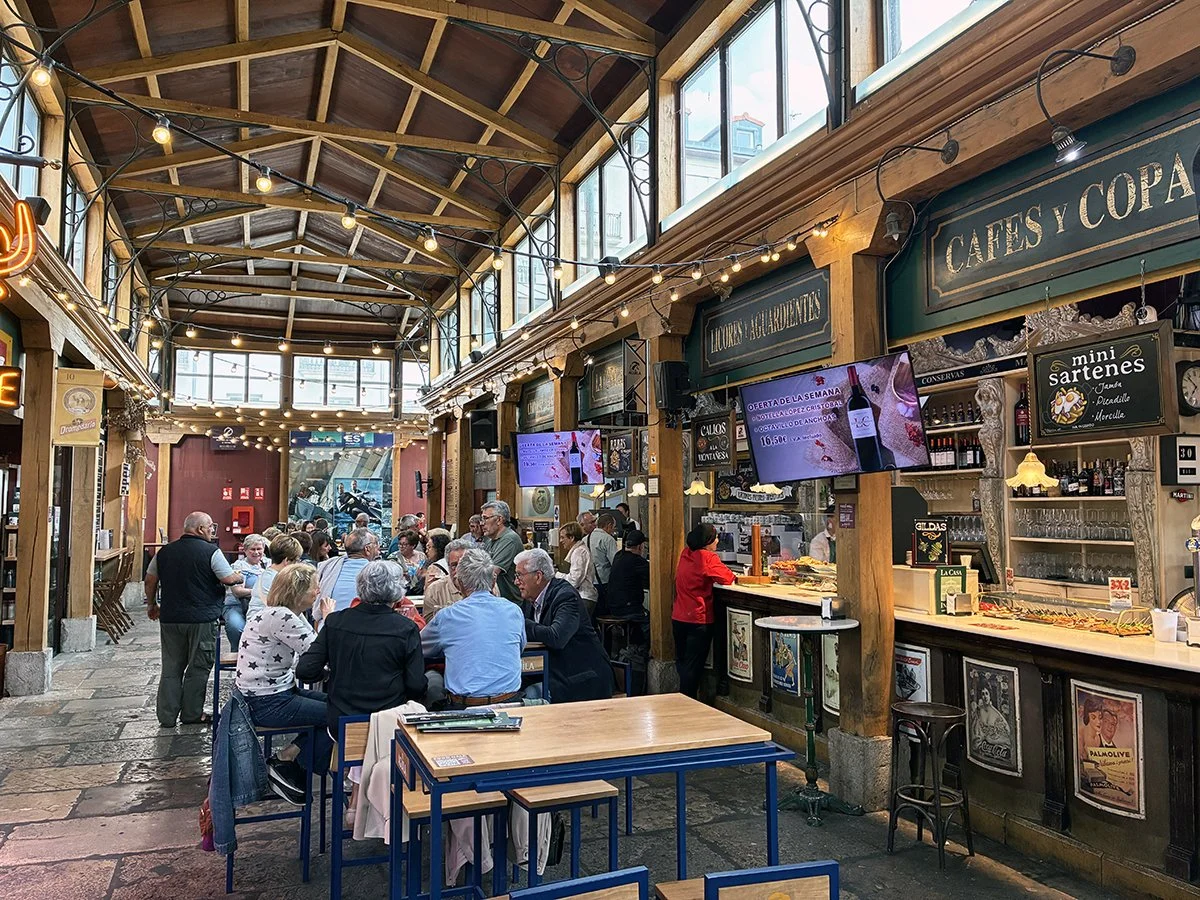
It doesn’t get more Spanish than this!
Travel rarely unfolds exactly the way you expect—and in Spain, that’s often where the experience becomes most memorable.
Keeping an open mind means letting go of rigid expectations about how things should be. Meals might take longer than you’re used to. Shops may close in the afternoon. A place you hadn’t planned to visit might end up being the highlight of your trip.
Rather than seeing these moments as inconveniences, try to approach them with curiosity. Why does the day unfold this way? What does it reveal about daily life here?
It also means being open to differences in culture and communication. Service in restaurants, for example, can feel less hurried and less attentive by some standards—but that’s often because there’s no pressure to turn tables quickly. You’re being given time, not ignored.
You might also notice differences in social norms—how people interact in public spaces, how late evenings stretch on, how entire communities gather in plazas. These aren’t things to adapt to perfectly, but to observe and appreciate.
An open mind allows you to move with the place rather than against it. And often, it’s in those moments—when expectations soften and curiosity takes over—that travel begins to feel less like a checklist and more like a genuine experience.
Connect with locals
One of the best ways to learn about a culture is to connect with locals. Talk to people you meet while you're in Spain and ask them about their lives, their culture, and their country.
You can also try attending local events or joining a tour led by a local guide. This is a great way to get an insider's perspective on Spain.
And, of course, don't forget to try the local food!

Locals enjoying drinks and dinner in Plaza Mayor, Trujillo Spain.
Food is one of the most natural ways to practice mindful travel in Spain.
Meals are meant to be shared and enjoyed slowly. Ingredients are often seasonal and regional, and the experience of dining is as important as the food itself.
Instead of trying to try everything, focus on a few meaningful meals. Sit down, take your time, and pay attention—not just to what you’re eating, but to the atmosphere around you.
Connecting with locals is a great way to get recommendations for the best places to eat. In fact, that is a surefire way to make sure that you only eat the best food in Spain!
Be respectful of the culture
When you're traveling, it's important to be respectful of the cultures you encounter. This means being aware of your own cultural biases and assumptions, and not making judgments about others.
It also means being mindful of your actions and how they might impact others.
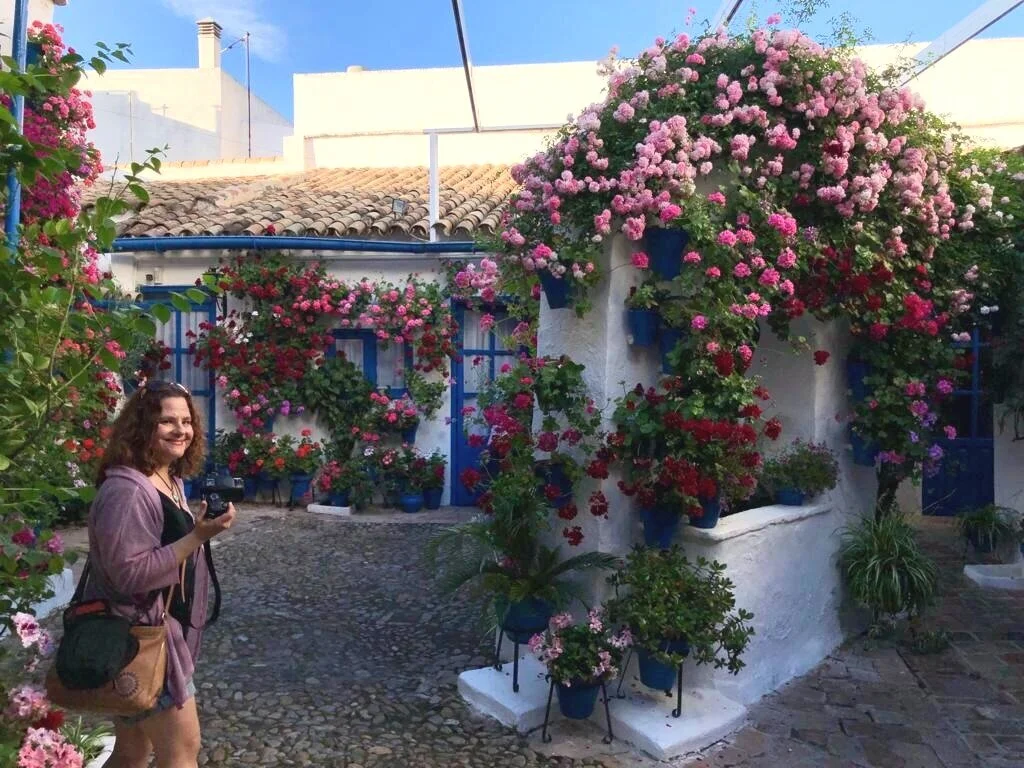
Spain Less Traveled founder Karen Roseblum enjoying La Fiesta de los Patios in Córdoba, Spain
Mindful travel also means paying attention to how you move through a place.
Simple gestures—greeting someone when you enter a shop, keeping noise levels down in residential areas, observing local customs—go a long way.
Some spaces, such as churches or local festivals, carry cultural or religious significance. Approaching them with awareness and respect helps maintain their meaning.
Often, it’s these small adjustments that create a more natural and respectful experience.
Embrace the chaos!
Spain is a busy, vibrant country, and it's part of what makes it so special. Embrace the chaos and allow yourself to be swept up in the energy of the place.
Don't worry if things don't go according to plan, as this is all part of the adventure.
Go with the flow and see where the day takes you. You might just find yourself having the time of your life.
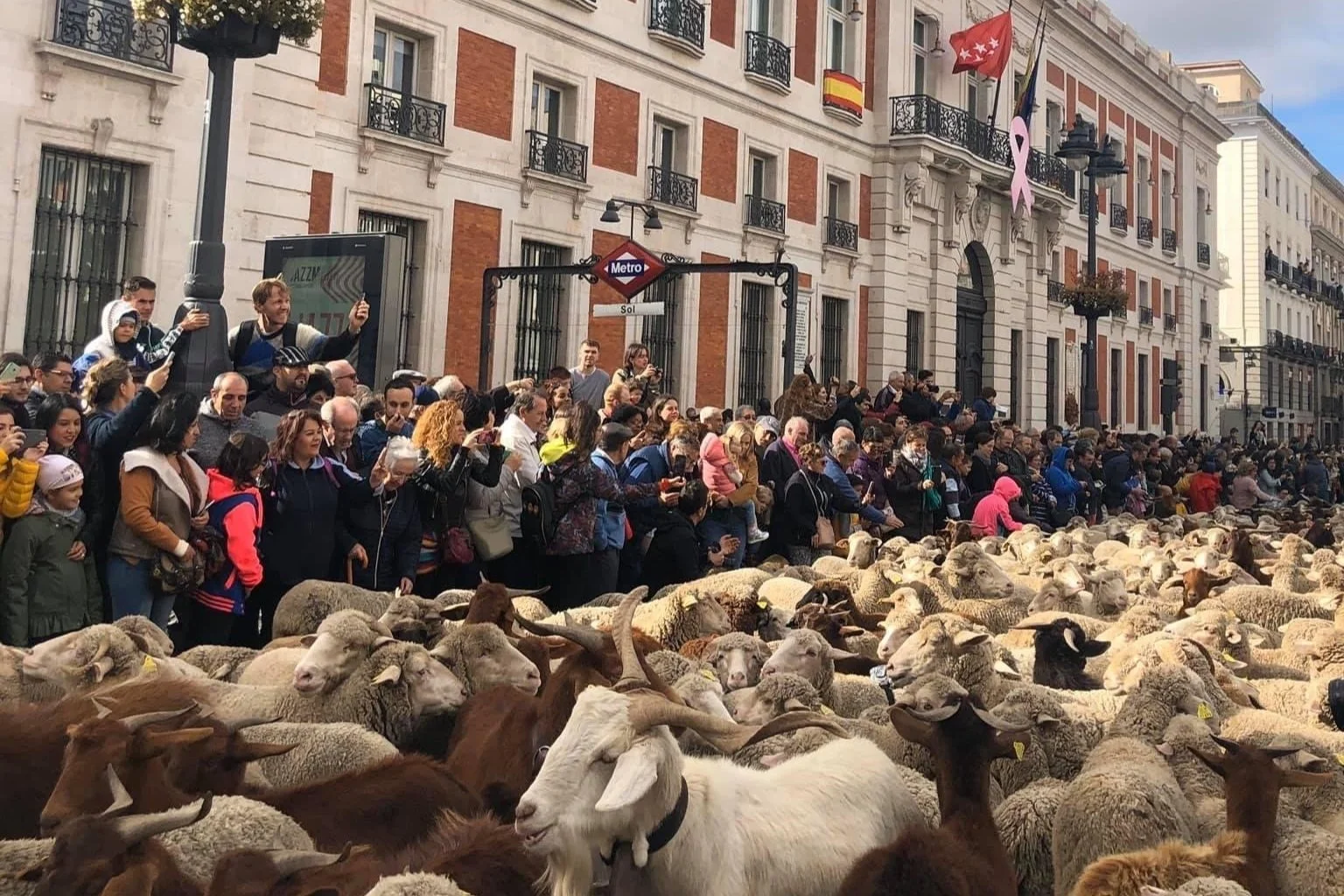
Sometimes things won’t go as planned. But Spain is full of surprises!
Not everything will go exactly as planned. That’s part of the point.
You might miss a reservation, take a wrong turn, or stumble into something you didn’t expect. In Spain, those moments often lead to something better—a small bar you wouldn’t have found otherwise, a quiet street at the right time of day, a conversation that wasn’t on your itinerary.
Presence is what makes a moment meaningful, not precision.
Travel in ways that support local communities
Mindful travel isn’t only about your own experience—it also considers the places you’re visiting.
Choosing locally owned accommodations, eating at independent restaurants, and shopping at markets rather than chains helps keep your presence rooted in the community.
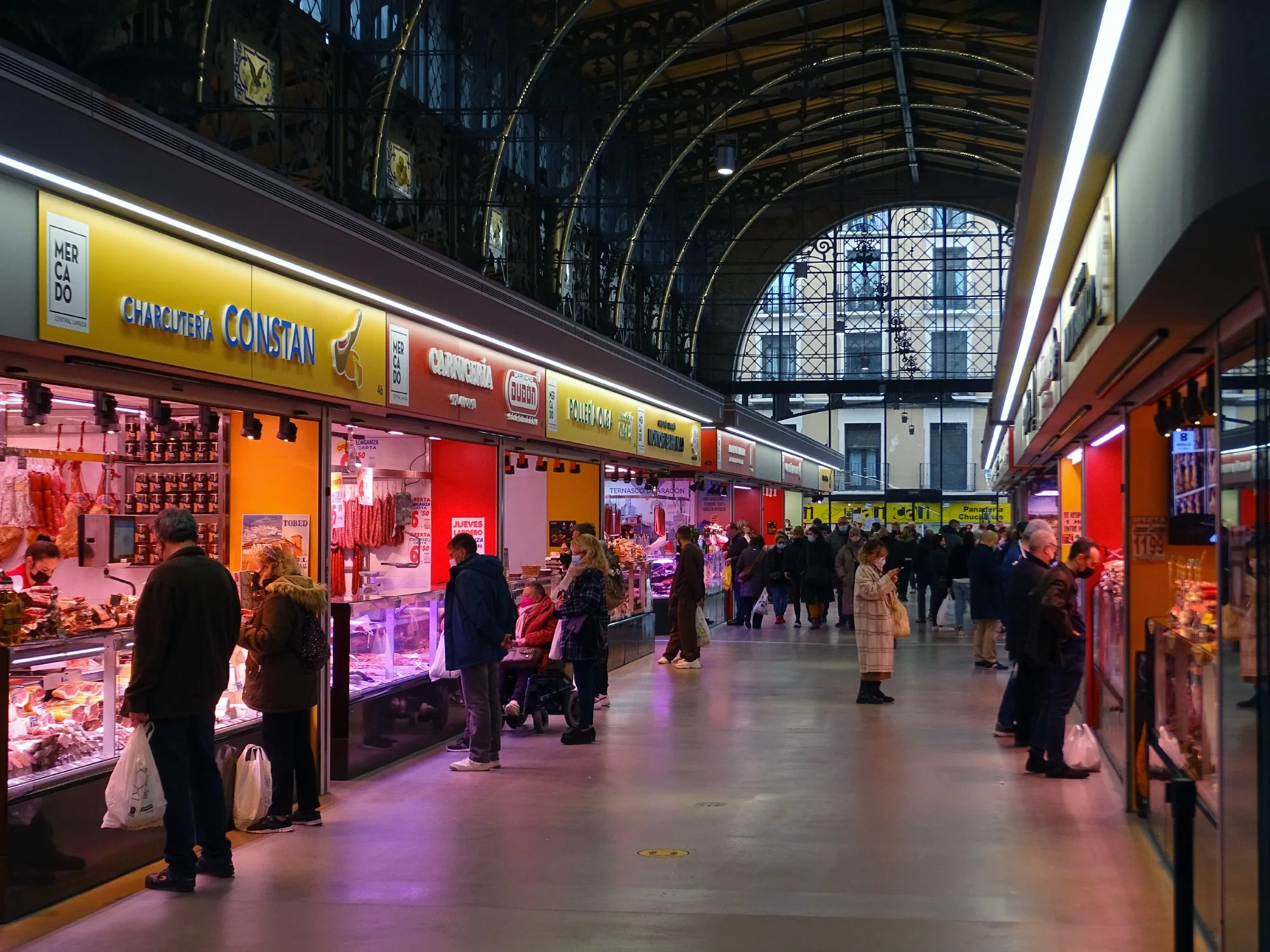
The local market in Zaragoza.
In some parts of Spain, especially in historic city centers, tourism has created pressure on daily life. Being aware of that—where you stay, how you move through neighborhoods, how you engage—makes a difference.
Traveling in shoulder seasons, when possible, can also ease that pressure while giving you a more relaxed experience.
Also, consider buying souvenirs made by locals. A true reminder of your trip to Spain.
Choose destinations that encourage slower travel
Where you go shapes how you travel.
Some places in Spain naturally invite a slower pace—regions where life hasn’t been built around high-volume tourism, where daily routines remain intact, and where there’s space to settle in rather than move through quickly.

Aviles in Asturias is a wonderful smaller city to visit.
Northern regions like Asturias or Galicia offer a quieter, more reflective experience, with strong connections to landscape and tradition.
Extremadura feels largely untouched, with historic towns that don’t revolve around visitor flow.
In Andalucía, stepping beyond the most visited cities reveals a different rhythm entirely—smaller towns, local traditions, and a pace that encourages staying a while.
Choosing these kinds of places doesn’t mean avoiding well-known destinations entirely. It just means balancing them with locations where you can slow down more naturally.
Stay longer, travel less
It’s tempting to fit in as much as possible, especially on a first trip.

The train station in Santander.
But moving constantly comes at a cost. Time in transit, time checking in and out, time adjusting—it all fragments the experience.
Staying longer in fewer places allows something else to happen. You begin to recognize streets, develop small routines, notice details you would have missed on a shorter visit.
Even adding an extra night or two in each destination can shift the entire tone of your trip.
You might like our guide to getting around Spain.
Final Thoughts
Spain is a beautiful country with a rich culture and history. By following these tips, you can ensure that your experience is both authentic and respectful. That is what mindful travel is all about.
Buen viaje! (Have a good trip!)
If you liked this… Check out our other resources!
Ready to start your journey?
Book a FREE 15 minute discovery call
to help you decide which of our professional Spain travel planning services suits you best.
About the author
Rebecca is an SEO Consultant and the Co-Creator of Be Blissful Travel, a travel site dedicated to wellness and sustainable travel.