Updated for the 2026 - 2027 holiday season with expert tips from a local!
Originally published 17 November 2026
All images are courtesy of the Spain Less Traveled team, unless otherwise stated.
This post contains some affiliate links. If you click on them and book a tour or experience, we may earn a small commission at no extra cost to you. We only link what we truly use and love. Thank you for supporting our work through these links. If you'd like access to our handpicked recommendations just for you—including private tours and specific guides, exclusively for our clients—you’ll want to book one of our professional Spain travel planning services.
When is Spain’s holiday season?
(Hint, it’s long…)
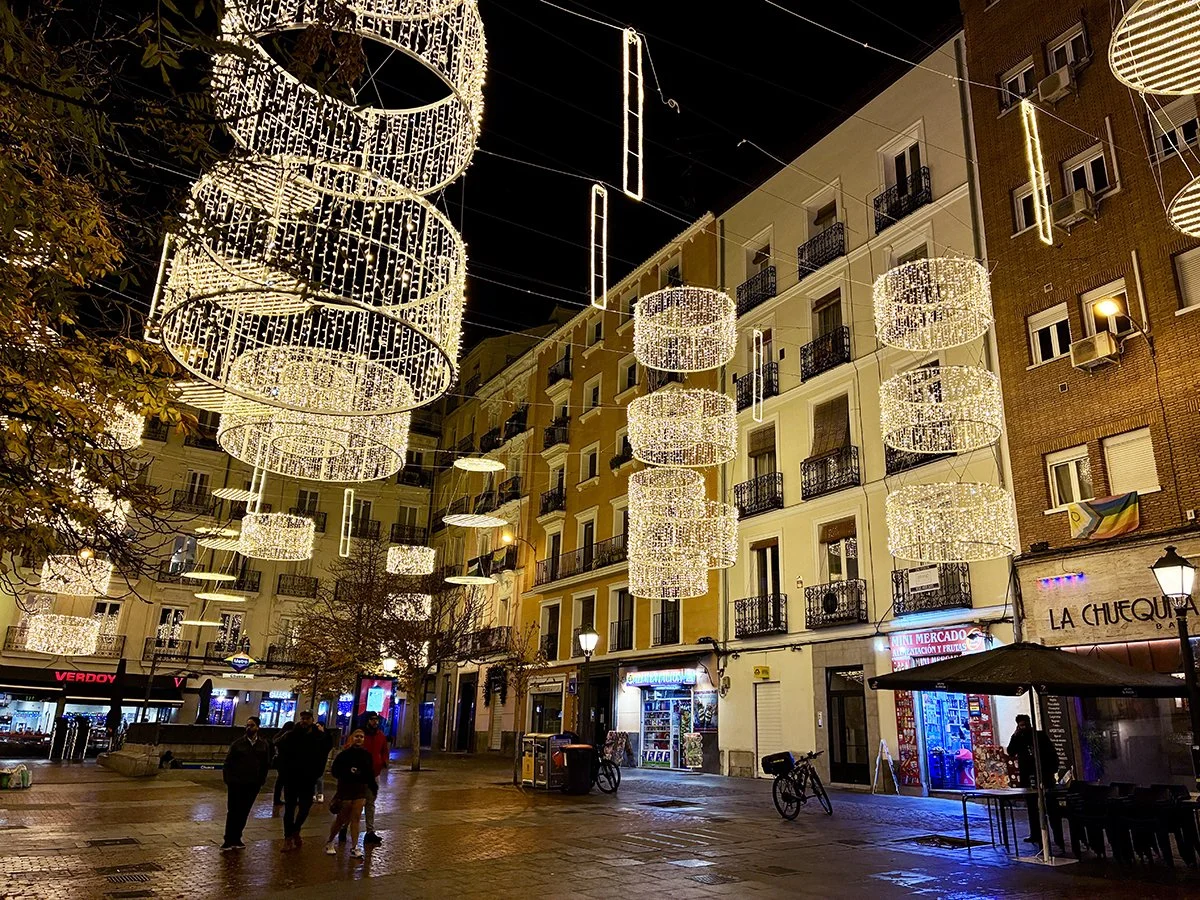
Plaza de Chueca always have some of the most modern and abstract Holidays lights in all of Madrid.
Holiday season in Spain is probably one of the longest in the world. It officially starts on the last Thursday of November, when most city lights are on. This year (2026) it will start even earlier, November 21st. The season ends on January 6th, the Three Kings Day. You may see Christmas decorations in shops before those dates.
Want to visit Spain during this timeframe? Let us help plan your holiday trip to Spain!
How does Spain celebrate the holidays?
Spain is a predominantly catholic country, so the holidays here are basically Christmas. Of course there are Jewish, Muslim and African communities in Spain, but their respective celebrations in those days have almost zero visibility in the country. So we’ll focus on those Catholic traditions and others more secular.
The most important family celebration is “Cena de Nochebuena”, or Christmas Eve dinner (December 24th). This is when all families gather together and nobody wants to miss it. That’s why it’s very difficult to find a restaurant open that night, as almost everybody is with their families.
“Comida de Navidad”, or Christmas Day lunch (December 25th) is a less important event, but since the family is already reunited and there is plenty of leftover food, why not continue the celebration?
“Nochevieja”, or New Year’s Eve is a more public event. A lot of people go to dinners in restaurants or hotels, followed by a “cotillón”, that means drinking and dancing until morning. Others have dinner at home and then go out for the party.
“Día de Reyes”, or Three Kings Day (January 6th). It’s the day kids get their presents, but the main event is the “Cabalgata de Reyes”, a parade that happens the day before in every single Spanish city. Madrid of course has the largest and most popular one.
What is there to do in Madrid around the holidays?
Being Spain’s capital and largest city, Madrid does the holiday season the biggest and (in our opinion) the best. Here are some Madrid-specific holiday traditions here in Spain…
Looking for more information about Madrid? We got it!
The Ultimate Madrid Travel Guide: Everything Madrid year round. All our top picks for the city!
Madrid Off the Beaten Path: Discover a lesser known Madrid
The Best Day Trips From Madrid: Our favorite escapes from the city
“Belenes”, a beautiful tradition
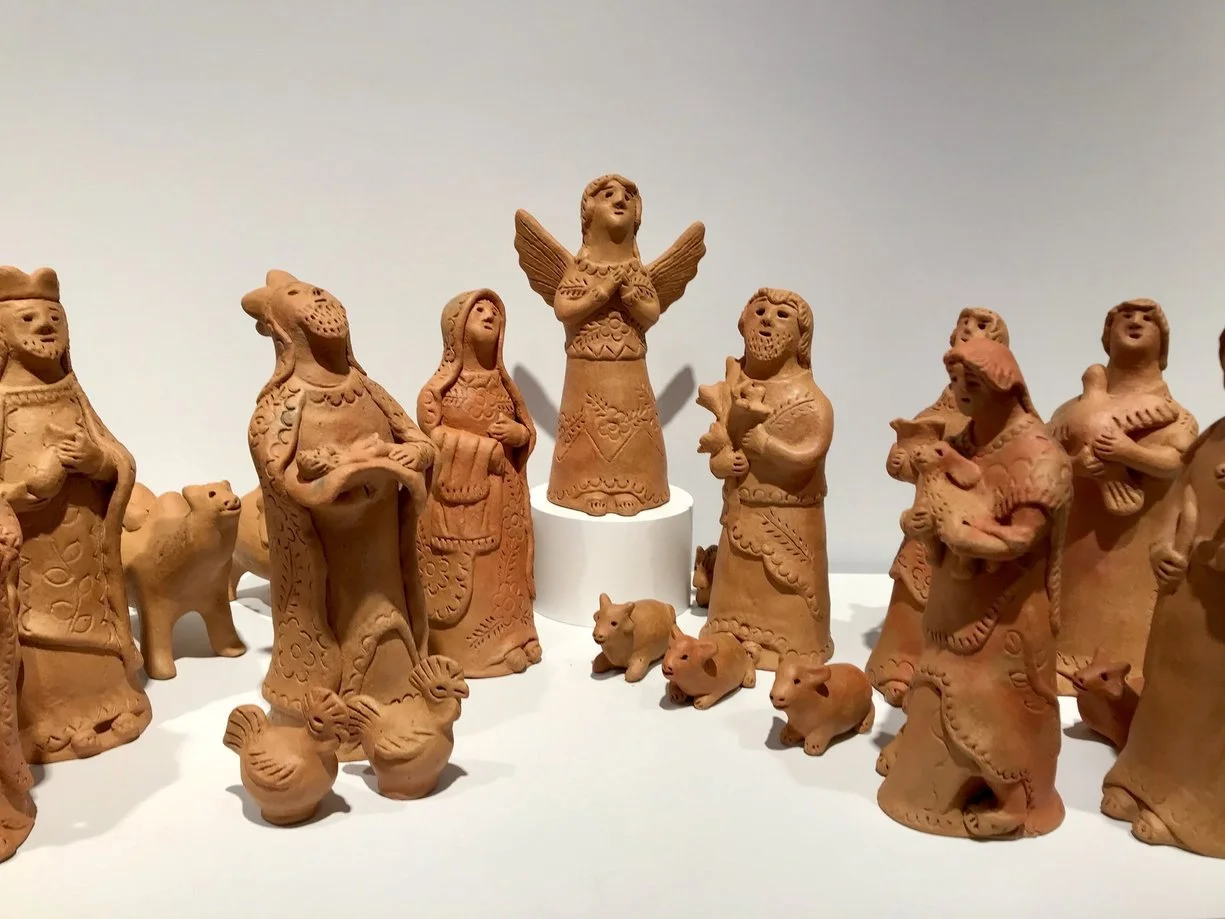
For a different “Belén” experience, you can visit Casa de México en España, for their annual exhibition of traditional Mexican nativity scenes.
Nativity scenes are representations of the birth of Christ, and they have a long tradition not just in Spain, but in other Catholic countries. The origin of this tradition was in 13th century Italy, when St Francis of Assisi organized a nativity scene using real people and animals in a cave. In Spain those representations are called “belenes”, as “Belén” is the Spanish word for Bethlehem. In Latin America they are called “nacimiento” or “pesebre”.
Most houses in Spain put together a “belén” during Christmas, with many different sizes and styles. The predominant one is the Napolitan style, with Baroque figurines. But you can find modern, regional and many other styles.
Not just houses, also public institutions, churches, hospitals, schools and even shopping malls put together “belenes”, and visiting them is a tradition. In Madrid the most importat ones are:
“Belén napolitano” in Madrid’s Palacio Real is a must-see if you are in the city. There may be lines but it’s totally worthy.
The “belén” at Madrid’s City Hall is usually impressive, with more that 200 figurines in 20 different sets. And it’s an excuse to discover one of Madrid’s most beautiful buildings, that visitors only see from the outside. (Plaza de Cibeles, 1)
Comunidad de Madrid, the regional goverment sets an even bigger “belén” with over 500 figurines and ellaborated sets. It’s right in Puerta del Sol, but be ready for long lines. (Calle del Correo s/n)
Museo de Historia de Madrid (the city’s history museum) also has a gorgeous Neapolitan style “belén”, with figurines from the 18th Century. (Calle de Fuencarral, 78)
And most of the churches and convents in the old area of Madrid have a “belén” on display.
For something different, Casa de México en España (A cultural center in Madrid for Mexican culture) holds a yearly exhibition of traditional Mexican “nacimientos”. (Calle de Alberto Aguilera, 20)
If you want to attend a living “belén”, with real persons and animals you’ll have to leave the city, as the best ones are in small towns of the region, You could go to Buitrago de Lozoya, Manzanares El Real or El Molar. But plan ahead, since most of them are just held once or twice during the holidays).
Madrid Christmas lights
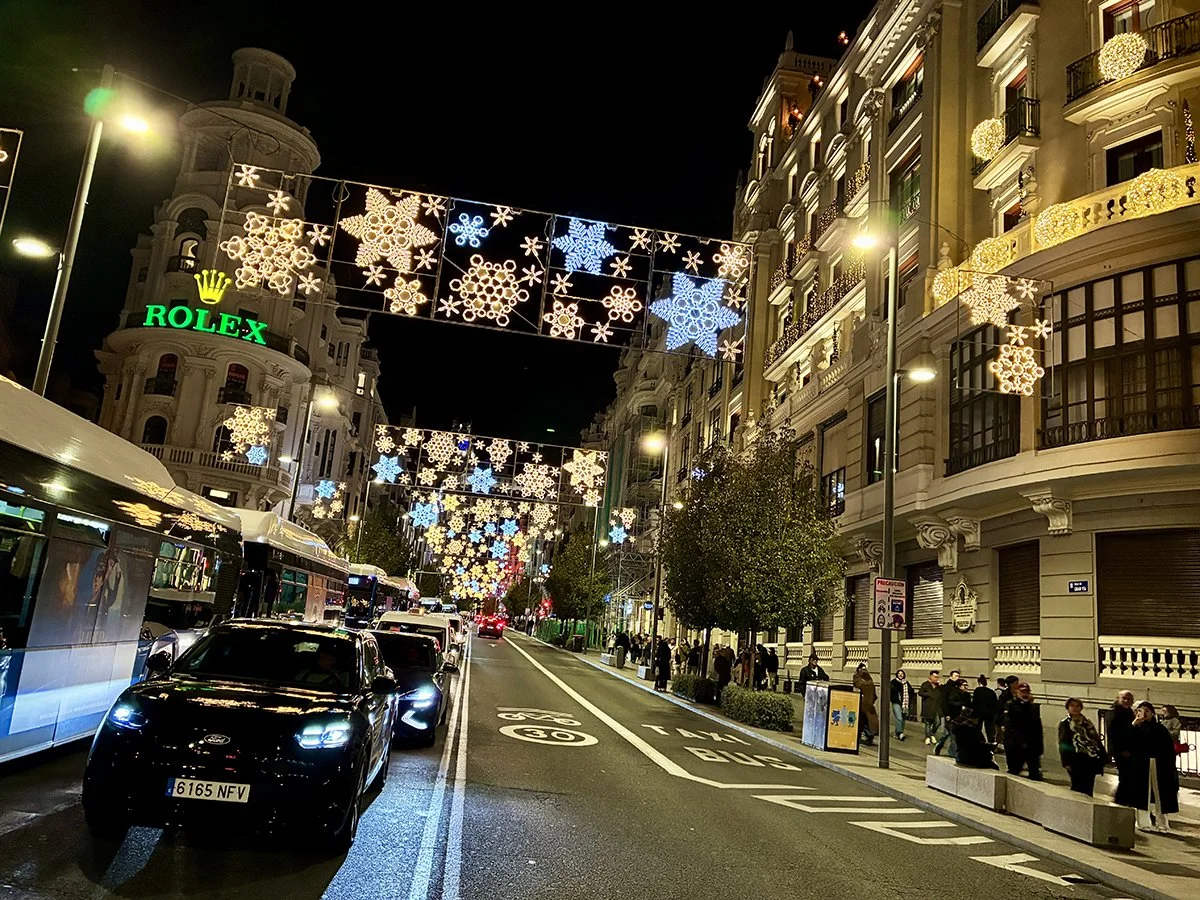
Gran Via is a lotal Chirstmas lights extravaganza.
City lights are a predominant feature of Spanish holidays. What started as illuminated Christmas trees and garlands has evolved into huge displays that take over complete city centers, and started a fierce competition between cities.
Being Spain’s largest city, Madrid has a huge display of lights. Some of the best areas to see Christmas lights are:
Gran Vía, especially at the intersection with Calle Alcalá.
The area surrounding the Canalejas gallery, especially the Four Seasons Hotel façade and the Canalejas plaza.
Puerta del Sol has the largest Christmas tree in the city, and Calle Arenal which leads to Opera has some beautiful lights too.
Barrio de Salamanca has beautiful lights, starting with the section of Alcalá street leading from Cibeles to Puerta de Alcalá, and also Serrano and Goya streets. And in Plaza de Colón you can see a giant “menina” made of lights.
The best way to see the lights is with Naviluz, a open deck bus that takes you through all the main areas. Tickets sell out quickly through the official website, so your best chance is by joining a tour. If this fails, you can book a tuk tuk private tour too.
Christmas markets in Madrid
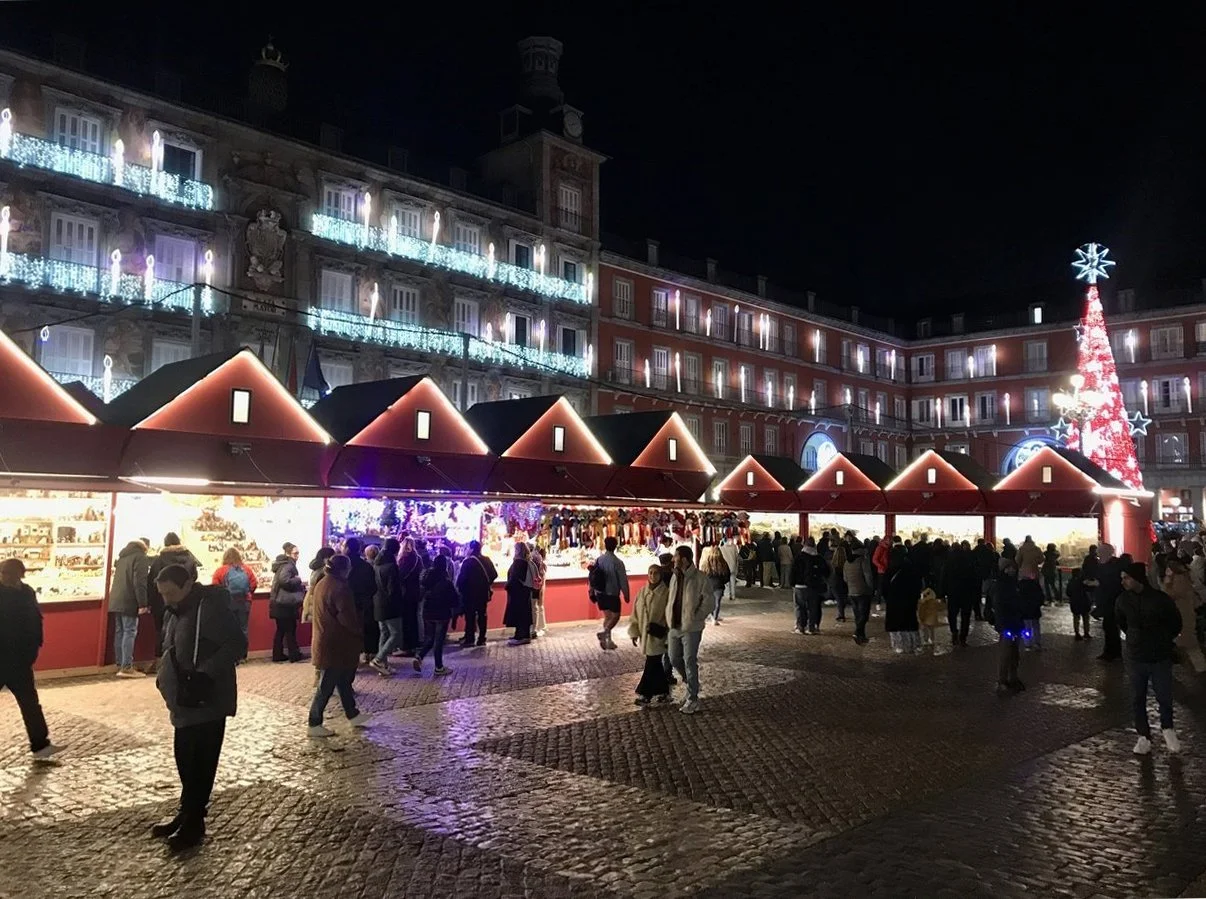
The Christmas market in Madrid’s Plaza Mayor.
First a disclaimer: If you are looking for winter wonderland markets like in Central and Northern Europe, go there. Christmas markets in Spain are different, less elegant, but very unique and Spanish. The main product they sell is Christmas decorations, including “belén” figurines and sets. You’ll also find wigs and masks, as locals like to wear them, and also small gifts, jewelry, etc. And of course food and drinks.
These are some of the main Christmas markets in Madrid:
The market in Plaza Mayor is the most famous and a “must”. It basically sells “belén” figurines and doesn’t have food and drinks, but it’s so pretty with cute kiosks and beautiful lights. It gets crowded but it’s spacious.
Plaza de España has plenty of space, but most of it it’s taken by a large ice rink for skating. Around it you’ll find mostly food and drink stalls, with some seating.
If you are looking for gifts go the Recoletos market, where you’ll find basically that, many stalls with artisans, jewellers, painters, etc. No food and drink though.
The market at Nuevos Ministerios is the best for foodies, with food trucks. There are some gifts stalls too, but if you don’t find the gift you want, you are right in front of El Corte Inglés.
There are smaller markets set in Plaza de Juan Goytisolo (right in front of Museo Reina Sofía), Plaza de Colón (very posh), Matadero Madrid or Madrid Río.
Delicious sweets and treats
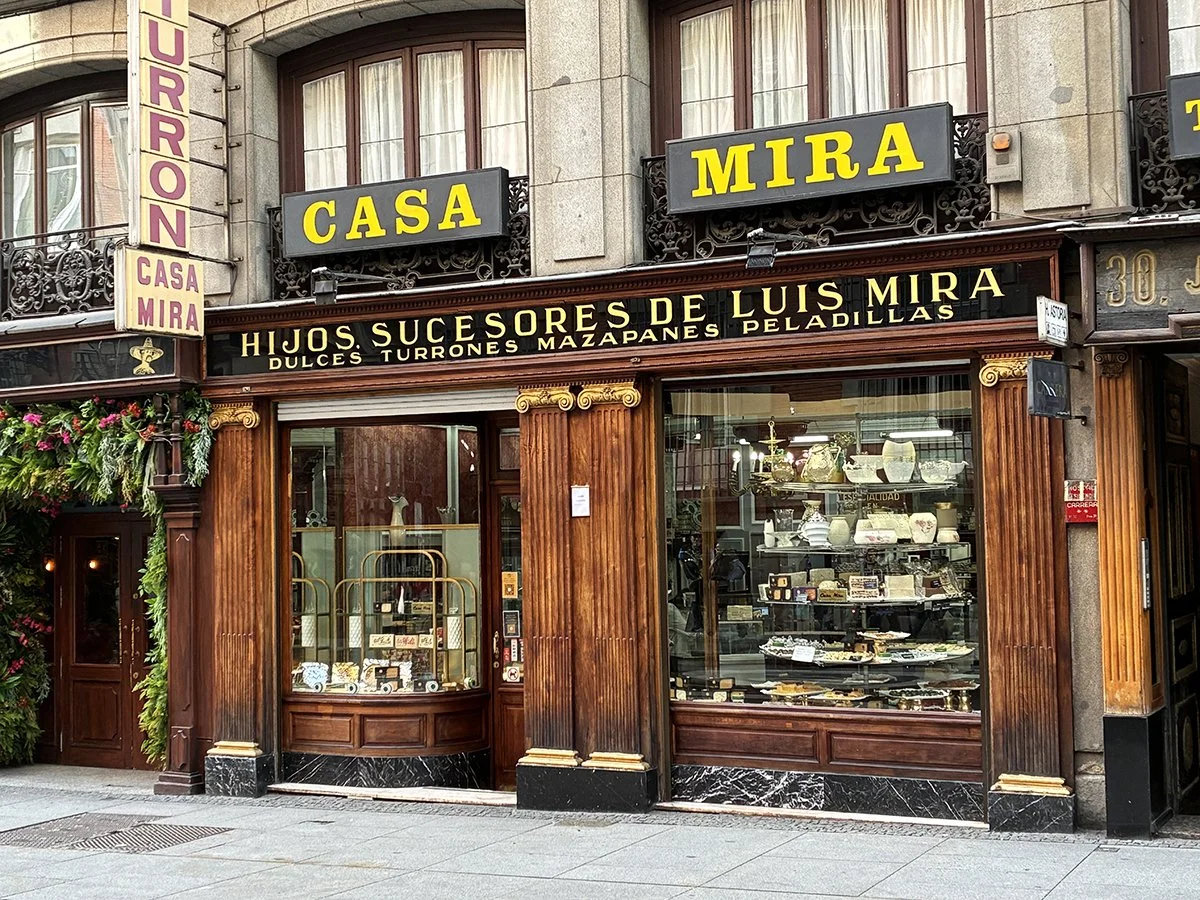
Casa Mira is one of the most traditional places to buy “turrones” and other Christmas sweets.
The most important part of Christmas cuisine in Spain is the sweets. There are plenty of delicacies that are only found during the season. Here is a small selection of dishes:
“Turrón” (nougat) is the king of Christmas sweets. It’s basically made with almonds, eggs and honey. There are plenty of varieties, but the most famous are “Alicante” (with full almonds), “Jijona” (with ground almonds), and “Turrón de chocolate” (with full almonds and chocolate). The origin is in Catalonia, but most of the production nowadays is in the Alicante province.
“Polvorones” are soft cookies made with flour, almond, cinnamon and other flavors. The most famous come from Estepa, in the Seville province, and they are so sandy (“polvorón” comes from “polvo”, that means “dust”) that you will be drinking a lot of water afterwards. But hey, they are delicious.
“Mazapán” (marzipan) is also made with almonds, but it’s even more sweet than “turrones” or “polvorones”. You can find them as small figurines, or as large cakes in the shape of an alligator. The best ones come from Toledo, and it’s one of the main souvenirs that you can get in the city all year long.
“Peladillas” are almonds or pine nuts with a white sugar coating. They are beautiful to decorate, but actually everybody is so full from other sweets to actually eat them.
Of course you can find all these sweets in every Spanish supermarket, but if you want to go the extra distance, there are some classical (and beautiful) sweet shops where you can get the best quality:
Casa Mira, located very close to Puerta del Sol is probably the most traditional place in Madrid to buy “turrón”, which they produce themselves since 1855. (Carrera de San Jerónimo, 30)
La Mallorquina, the most popular “confitería” in Madrid is right in Puerta del Sol, and a meeting point since 1894 for both locals and tourists to eat their delicious pastries. They have serveral location, but you only get the real experience in the original one. (Puerta del Sol, 8)
Very close to this last one, in Calle Mayor, you can visit El Riojano, a small local that maintains part of its 1855 decor. (Calle Mayor, 10)
Horno de San Onofre. They have several locations in the city, but the best is the original one, in Calle San Onofre, in Chueca. They claim to have one of the best" “roscón de Reyes” in town. (Calle de San Onofre, 3)
La Duquesita is a small and cute local, open in 1914, serving all kinds of hand-made Christmas delicacies. (Calle de Fernando VI, 2)
Cortylandia
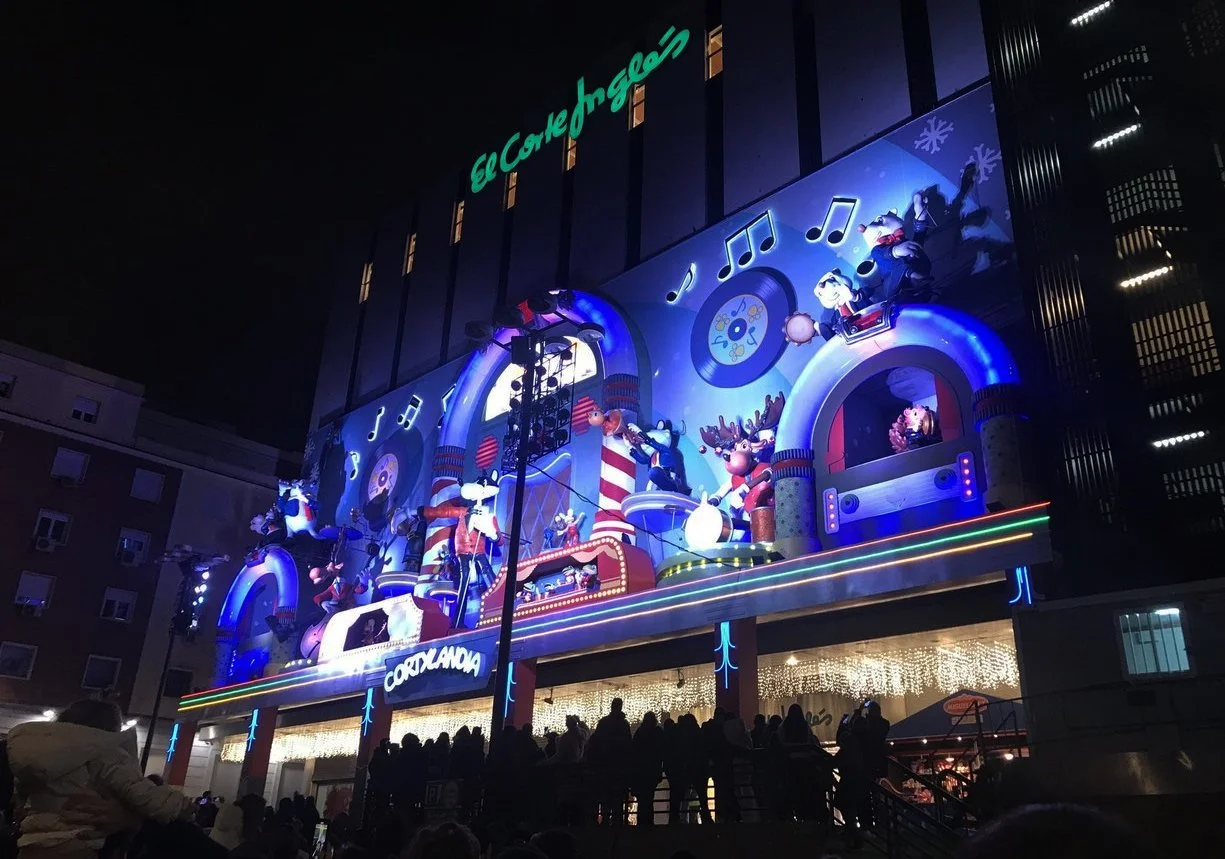
Cortylandia next to Puerta del Sol, Madrid
One of the most unique events during the holidays in Spain, and particulary in Madrid, is Cortylandia.
Cortylandia is the Holidays display that Spain’s largest department store chain, El Corte Inglés, puts on the façade of its Preciados store, near Puerta de Sol in Madrid.
The design is different every year, and almost always includes animatronics, lights, video projections and music. Ask any Spaniard to sing you the Cortylandia theme song and not a single one will fail to do it. And once you hear it, it will be stuck in your brain like forever.
The shows run for the whole season, and last about 15 minutes, but don’t worry, there is a show every 60 minutes or so. Kids and families will gather faithfully to watch it.
This year 2026, Cortylandia starts on November 21st and ends on January 5th, There are eight shows every day, three in the morning and five in the afternoon.
Christmas parks and shows
If Cortylandia feels short to you, there are many other Chirstmas lights parks and events where you can go:
Naturaleza Encendida is probably the most beautiful lights park in Madrid. It’s located in the Royal Botanical Gardens, right next to the Prado Museum. It combines lights, music, set and lasers. This year’s edition is based on Alice in Wonderland, and it also has an ice rink for skating.
Circlassica. Going to the circus in Christmas is also a tradition in Madrid. And Circlassica, set in the grounds of IFEMA, is the best one. It runs from late October to mid January. It’s a modern circus, inspired on Cirque du Soleil, with no animals. Other good option is Circo Price, which offers circus related shows all year long and has a popular Christmas extravaganza. (No animals)
And speaking of Cirque du Soleil, they are visiting Madrid this year with their Kurious show until December 27th.
A popular activity in Christmas is ice skating, and you can choose from four different ice rinks. Apart from thealready mentioned in Plaza de España, there are rinks in Plaza de Colón, Matadero Madrid and the glass gallery of the City Hall building.
If you are willing to leave the city, you will find several Chirstmas parks in some cities of the Madrid surroundings. The biggest one is “Navidades Mágicas”, in Torrejón de Ardoz.
Christmas shopping in Madrid
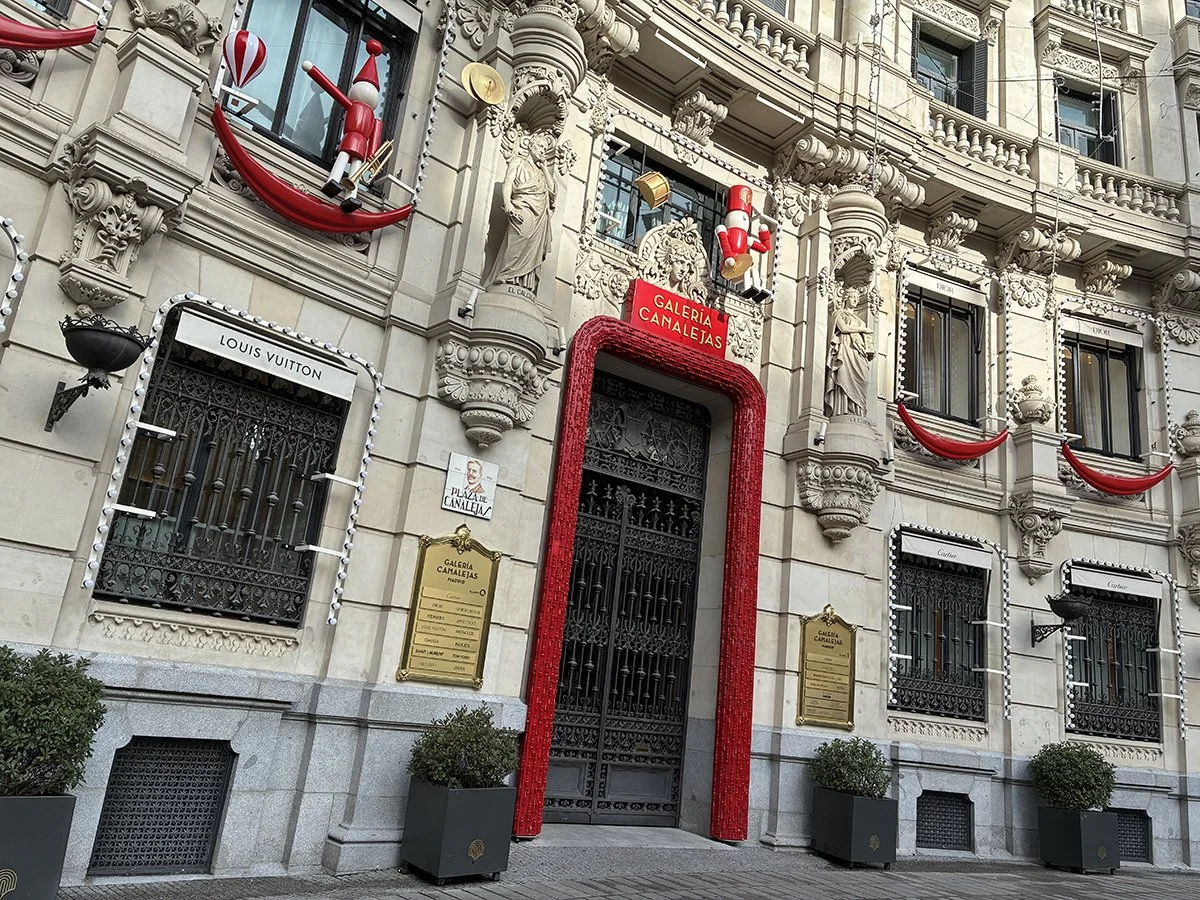
Galería Canalejas is a small, but luxurious, shopping mall near Sol.
Christmas is of course a big shopping season in Madrid too.
For great shopping head to the flagship branch of the Spanish department store, El Corte Inglés in Puerta del Sol. The basement has a huge grocery store where you can bring back some of Spain’s most local products (olive oils, etc). And there is also a Gourmet Experience, for some of Spain’s upscale food products. They sell everything, from clothes to shoes to electronics to souvenirs. This really is a one-stop shop!. There are other El Corte Inglés locations all over Madrid.
For local, boutique-type shops, both the Malasaña and Huertas/Barrio de las Letras neighborhoods have many locally-owned small shops. Gran Vía is Madrid’s main shopping street for flagship shops for many big Spanish and European brands. Calle Fuencarral is a (mostly) pedestrian-only, open-air mall.
For upscale shopping, go to Serrano and Ortega y Gasset streets, where all the prime international luxury brands have their stores.
And Galería Canalejas is a new luxury shopping gallery next to Four Seasons Hotel by Sol.
Religious celebrations in Madrid
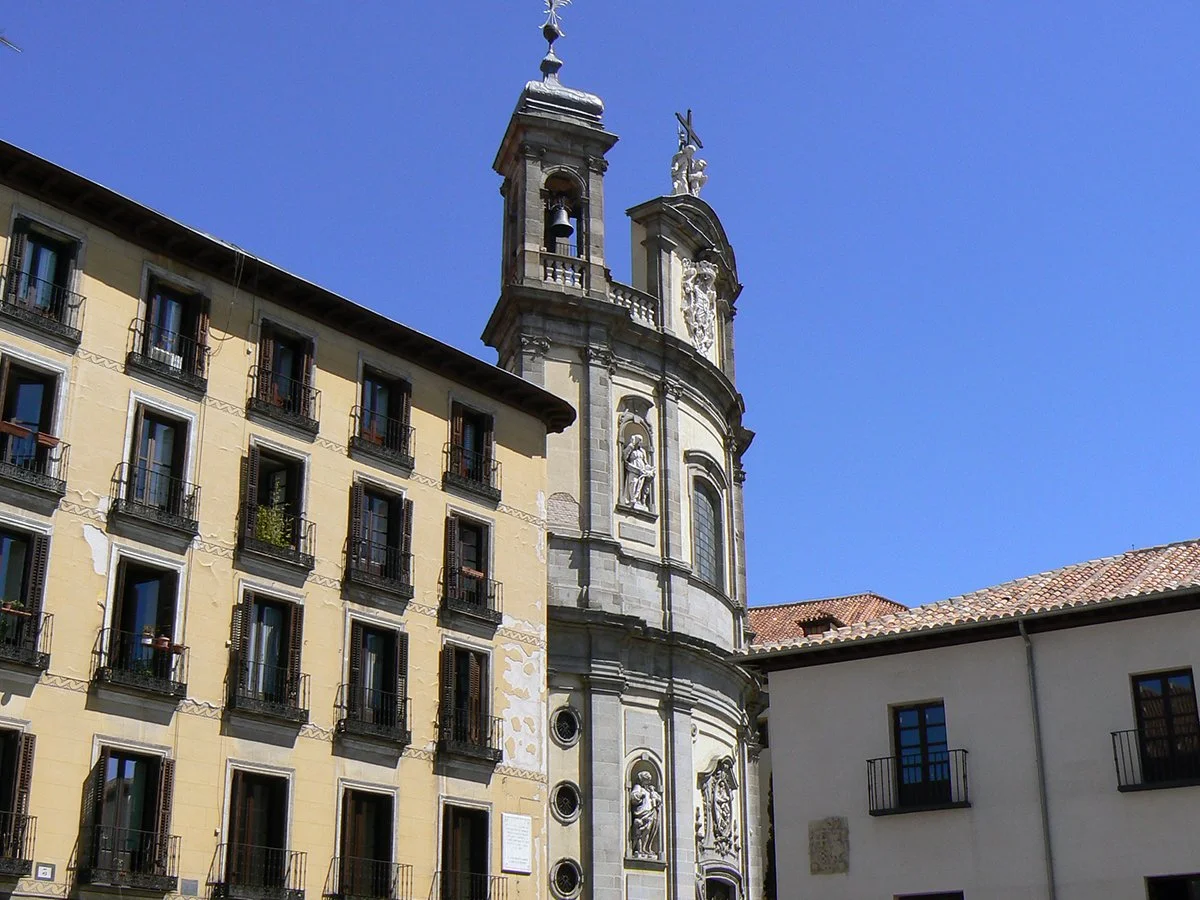
San Miguel is our favorite church in Madrid, and a perfect place to attend a Christmas Catholic mass or concert.
Of course there are religious celebrations in Madrid during the holidays, but often they are outshadowed by the bright secular celebrations. The most importantant is “Misa de Gallo”, a mass celebrated in almost every Catholic church on the midnight of December 24th, right after Christmas Eve dinner. The main cathedrals celebrate huge masses, with light and music, but you can find a more quiet experience in small churches. For the special settiing and ambiance, we recommend the ones in: Catedral de la Almudena, Basílica de San Miguel (probably the most beautiful church of Madrid) or San Isidro. But almost any neighborhood celebrates one. Please note that not every church celebrates “misa de Gallo” at midnight, many do it at 8 or 9 pm.
And there are many Christmas music concerts, some classical, some popular, in every single Madrid church.
Snow and Skiing near Madrid
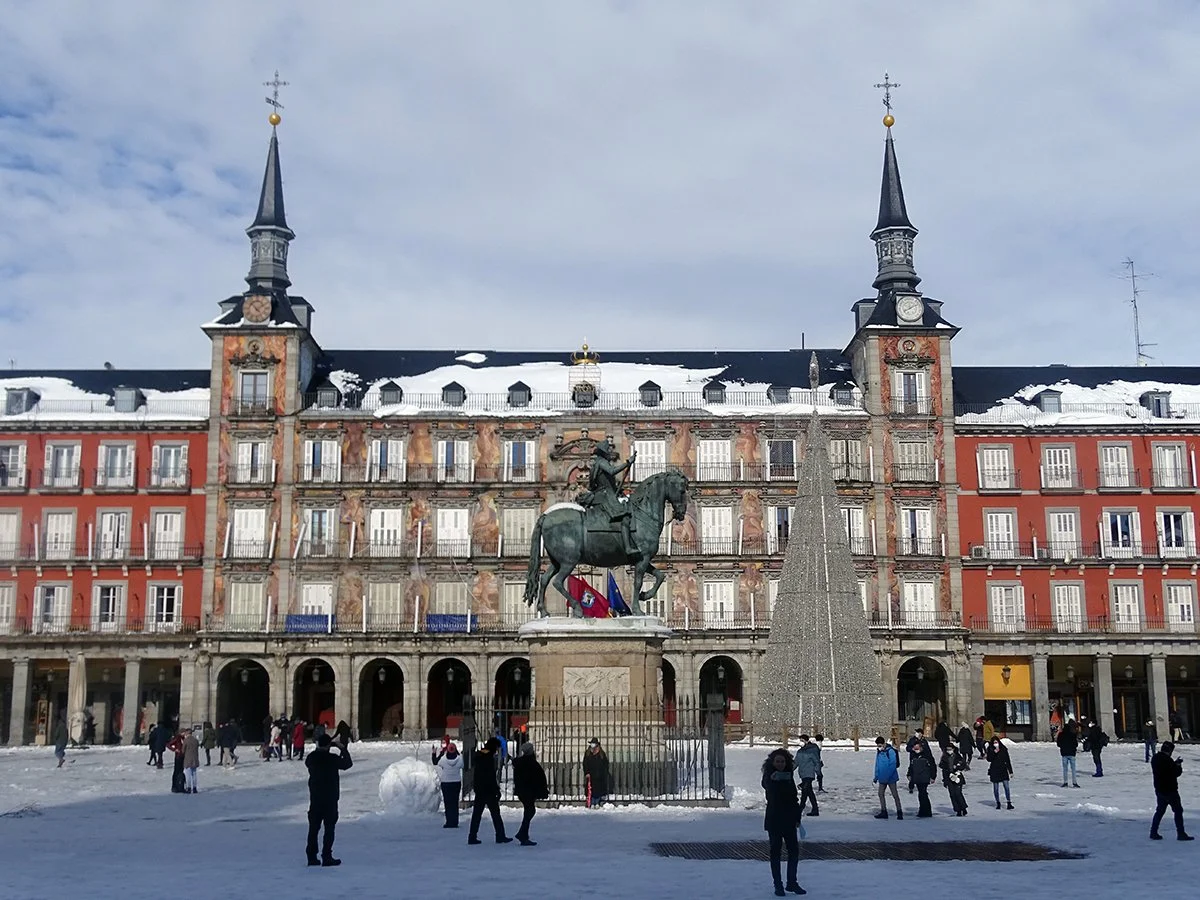
We won’t lie, your chances of experience a White Christmas in Madrid are low. But Madrid is gorgeous under the snow.
Madrid rarely sees snow in Christmas. The large snow blizzard “Filomena” in 2021 was a once in a lifetime thing.
If you want to see some decent snow you have to go to the “sierra”, about 60 km from Madrid. The easiest place to go is Cercedilla, connected to Madrid with regular Cercanías trains. With an altitude of 1200 meters, your chances to see snow are high. And it’s a cute town with many hiking options in the surroundings.
El Escorial is also by the sierra. With an altitude of 900 meters, snow is less probable, but possible. And it’s a beautiful town with many Christmas activities and ambiance too. Not to mention the amazing Royal monastery.
Madrid has two ski stations: Navacerrada and Cotos. They are small but offer a decent skiing experience. There is a mountain train from Cercedilla to both, but it’s been closed for renovations for more than two years. There is an alternate bus service that you can take. You can rent ski equipment there, but we strongly recommend not going on a weekend, as crowds can be insane.
Eating grapes for New Year’s Eve
Spain’s New Year’s Eve is also very unique because of the “uvas” (yes, grapes). The tradition says that you have to eat a grape on every chime of midnight. If you succeed in not suffocating yourself, you’ll be lucky for the new year. But not every clock works. Everybody on New Year’s Eve has a TV nearby with a live connection to Madrid’ Puerta del Sol, whose tower clock sets the rhythm. All TV and radio stations have live connections.
Puerta del Sol in Madrid is the Spanish equivalent of Times Square for NYE, and it’s an option to go if you are visiting Madrid that day. But be aware that it gets really crowded, with people arriving early in the afternoon to secure a place. And it can gets very caothic, so we recommend going better to a private party in a hotel or restaurant. (There are plenty).
In Madrid, a beautiful local tradition is to receive the new year in a theater, watching a live show (mostly musicals). Shows are timed so the ending or the intermission coincides with the year’s end. Audiences are given small champagne bottles and the traditional grapes. Cast and crew go onstage to announce the new year and lead the toasts. And there’s usually an after show with music, dancing, and impromptu performances.
“Cabalgata de Reyes”, the perfect closing of the holidays
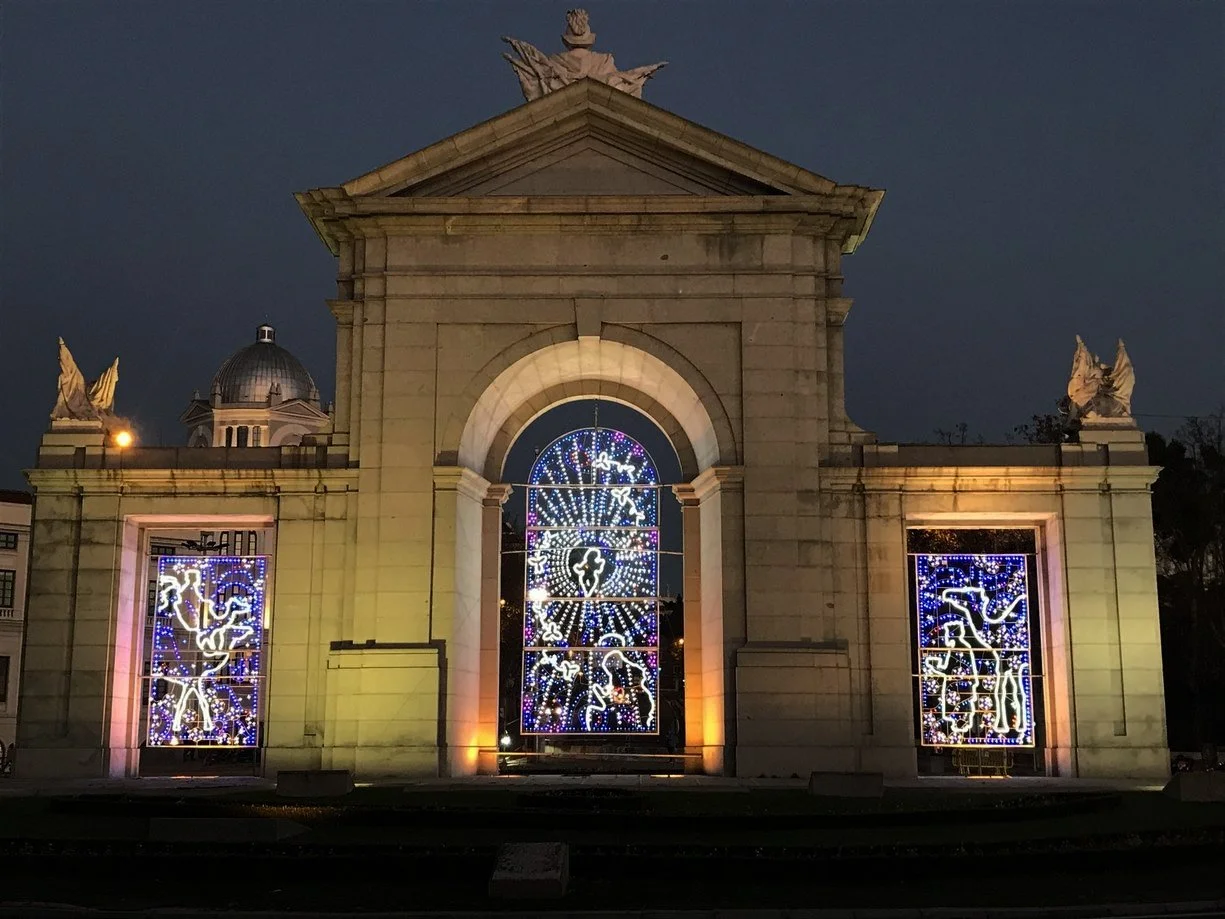
The iconic Puerta de San Vicente, lit for Christmas, with Three Kings motifs.
The last event of the holidays is “Cabalgata de Reyes” (Three Kings Parade). It takes place in every single Spanish city on the evening of January 5th. Kids and families gather to watch the different floats with singers, dancers, actors and local celebrities playing the Three Kings. Attendants will have to endure a rainfall of candies, some very hard (some even carry umbrellas that they open upside down to catch more).
Of course the largest “cabalgata” in Spain takes place in Madrid. The parade goes along Paseo del Prado, Recoletos and Paseo de la Castellana. And there are also local “cabalgatas” in every district of Madrid. Vallecas and Usera are the most popular ones.
Do you want to fully experience the Holidays in Madrid? Let us help you plan your trip!
You have seen that there is so much to do in Madrid during the holidays. It’s a very busy time to visit the city, making travel planning more difficult, so any extra help is welcome. We can help plan your dream Holidays trip to Madrid, Spain.
Ready to start your journey?
Book a FREE 15 minute discovery call
to help you decide which of our professional Spain travel planning services suits you best.