Alicante - Spain Less Traveled Guide for a Great City Break.
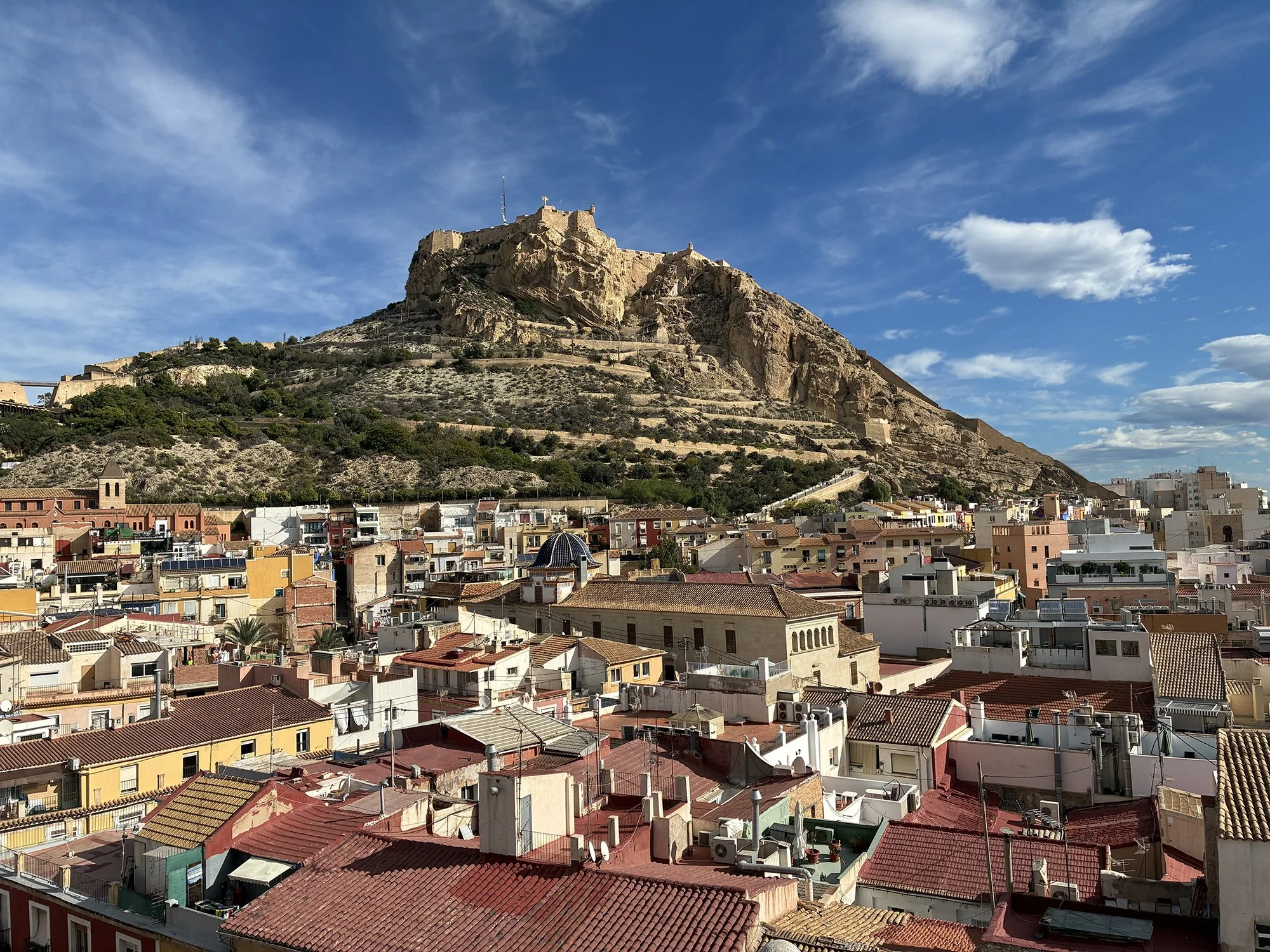
The castle of Santa Catalina looming over Alicante’s old town
Originally published 24 March 2026
All images are courtesy of the Spain Less Traveled team, unless otherwise stated.
This post contains some affiliate links. If you click on them and book a tour or experience, we may earn a small commission at no extra cost to you. We only link what we truly use and love. Thank you for supporting our work through these links. If you'd like access to our handpicked recommendations just for you—including private tours and specific guides, exclusively for our clients—you’ll want to book one of our professional Spain travel planning services.
Why visit Alicante?
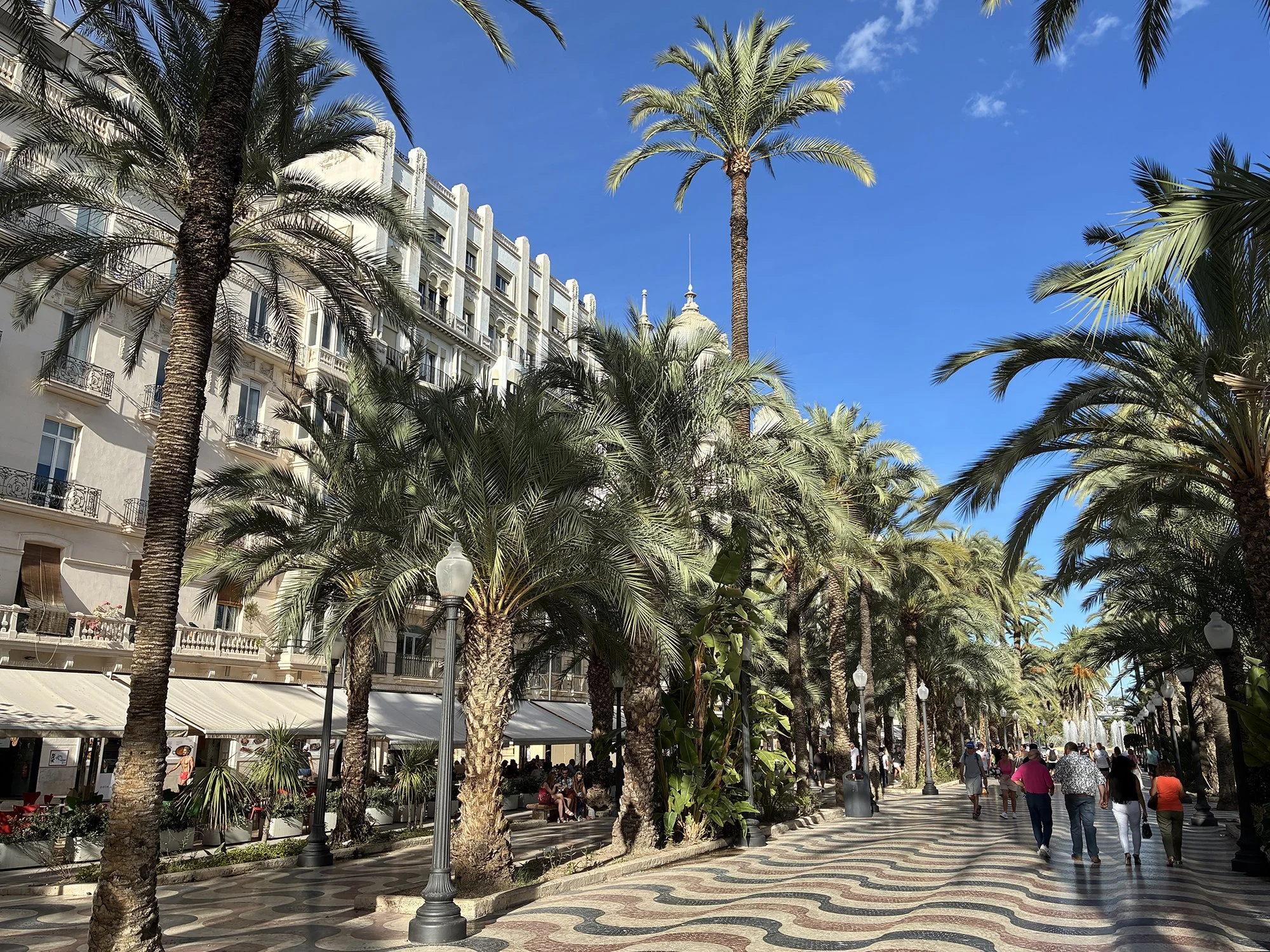
The “Explanada” is the most famous promenade in Alicante.
WIth a population of over 350,000, Alicante is the 10th largest city in Spain. It’s also one of the main destinations for sun and beach tourism, with people from all over Europe coming to the city and the surrounding region to enjoy the sea. But Alicante is much more, it’s a Mediterranean town with a rich history and legacy, that after many years of abandon, it’s recovering and becoming a vibrant and attractive city. Here is our guide to better discover and enjoy the city, perfect for a short city break.
Where is Alicante?

Image courtesy of VectorStock.
Alicante is located in Eastern Spain, in the Comunitat Valenciana region, right by the Mediterranean Sea.
In Alicante, the “Valenciano” language is also spoken. Actually the official name of the city is “Alacant”, as in “Valenciano” (a language very similar to Catalan, spoken in all of Comunitat Valenciana). Since most of the street and building signs are in “Valenciano”, we’ll use those names in this blog.
What’s the best time to visit Alicante?
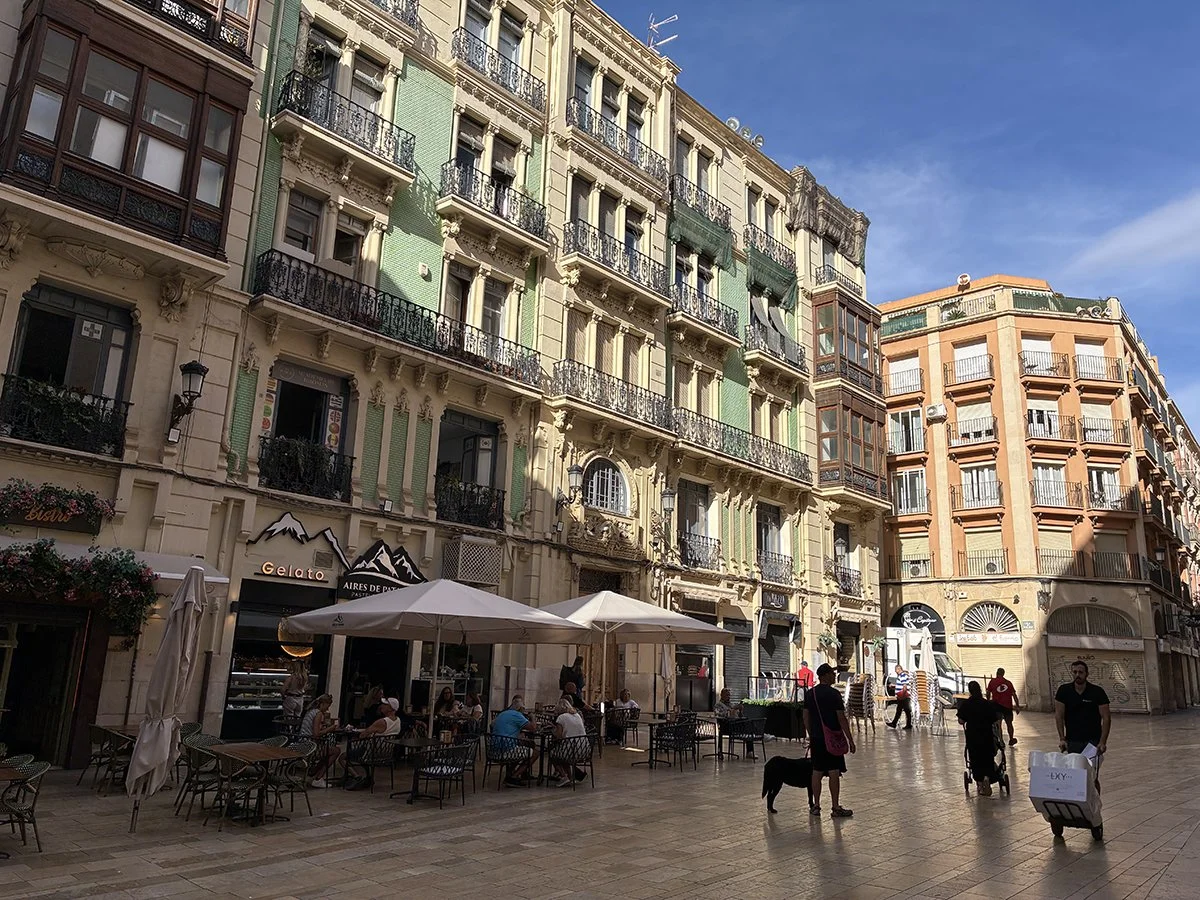
Alicante enjoys summer weather well into the fall.
Alicante, as all regions by the Mediterranean Sea, enjoys a mild climate. Summers (June to September) are hot and humid, while winters (December to March) are temperate, making it a great destination to visit all year round. Nevertheless, the time between late September and early November is DANA season, so it’s better to avoid. DANA is a weather phenomenon typical of the Mediterranean coast that can bring heavy rains and flooding, but it doesn’t happen every year.
If you are into crowded and noisy festivals, then late June, around St John’s day (June 24th) is your time to visit. More on this great festival further down.
How to get to Alicante?

High-speed trains connect Madrid and Alicante in about two and a half hours.
Alicante is very easy to reach, by plane, trains and car.
Plane: Alicante’s airport is one of the most important in Spain, with direct flight connections to many Spanish and European destinations. You can fly direct to Alicante from almost all large cities in Europe, especially from Germany, Scandinavia and the United Kingdom. From Madrid, it’s a short one hour flight.
Train: There are many daily high-speed trains from Madrid to Alicante. All three train companies in Spain offer the service, that takes a little over two hours.
Trains to Alicante from Madrid depart from Madrid Chamartín - Clara Campoamor station. There are also local trains from Valencia and Murcia, and long distance trains from Barcelona, althought they take around 6 hours. Only Renfe operates those lines.
Car: If you are driving, Alicante lies by the A7 highway (toll), that goes along the eastern Mediterranean coast. It’s also reached from Madrid through the A3 and A30 highways. From Madrid it’s a 4 hour non-stop drive, 2 from Valencia, and 5 and a half from Barcelona.
What to see and do in Alicante?
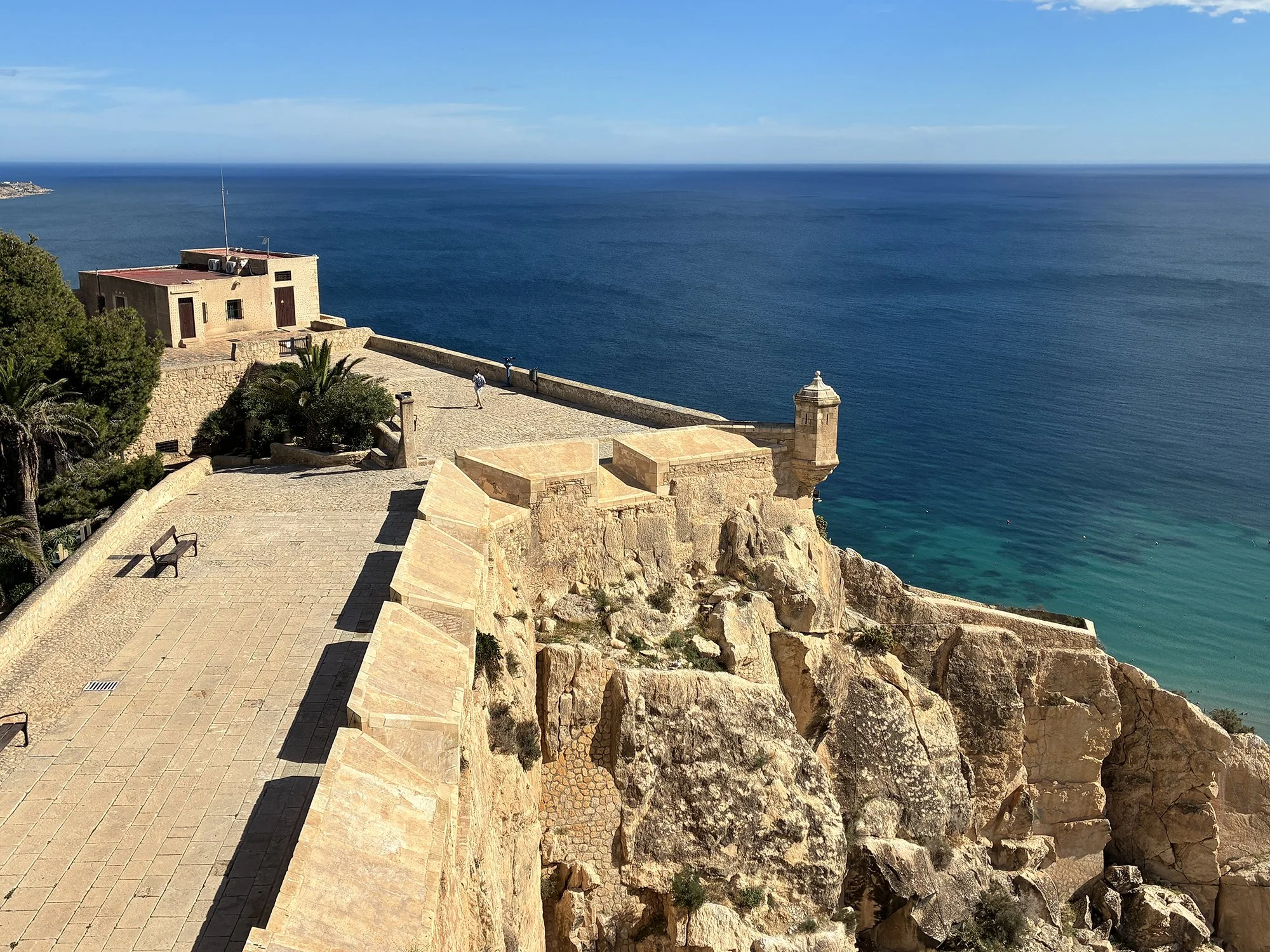
View of the Mediterranean sea from the castle of Santa Catalina.
When visiting Alicante you won’t run out easily of things to see and do. From historical sites to breathtaking views of the Mediterranean, you’ll find something cool all the time. Here is our selection of the most interesting places in the city:
Old Town: It’s an eclectic mix of traditional Mediterranean architecture, early 20th century splendour and modern blocks. Some hightlights are the City Hall, a magnificent 18th century Baroque building with a modern annex where you can explore the medieval remains of the city, the cozy tree covered Plaça del Portal de Elx or the elegant Teatre Principal, the city’s main theater.
Cathedral of St Nicholas of Bari: The city’s cathedral can be a little disappointing in terms of architecture, with a plain exterior and a too sober interior. But the visit is super interesting, as you get to climb to the upper gallery that surrounds the main space, with amazing views not for the faint hearted. And you also get to go to the top of the bell tower, for beautiful views of the old town and the castle.
Castle of Santa Catalina: On top of the city, and visible from eveywhere, the Castle of Santa Catalina is a favorite for visitors. It’s easy to access through the tunnel and elevator located in Postiguet beach, and it’s worth the visit for the interesting fortress structures and the gorgeous views of the Mediterranean Sea.
Basilica of Santa María: The most beautiful church in town, with an impressive Baroque façade and an elegant Gothic interior, full of great works of art.
Carrer dels Bolets or Calle de las Setas: The city’s most famous Instagram spot. In San Francisco street, a series of huge sculptures of mushrooms populate this pedestrian only street. Some are humanized, with faces and arms, others you can go inside. A favorite also for kids.
Explanada de España: Just named “L’Explanada”, this elegant palm tree covered promenade is the symbol of the city. Both locals and tourists stroll along it all day long, especially at sunset. The pavement is similar to the one in Rio’s Copacabana. The promenade starts in the marina and ends in Canalejas park, the largest one in the city.
Marina: In front of the Explanada you’ll find the sports marina. It’s a beautiful area with docks, restaurants and even a casino.
Beaches: The city has several beaches (“platjes” in Valencian) to enjoy: Platja del Postiguet is the only one right in the city center. Platja de l’Albufereta, l’Almadraba and Sant Joan are a bit further east.
What are the best tours and experiences in Alicante?
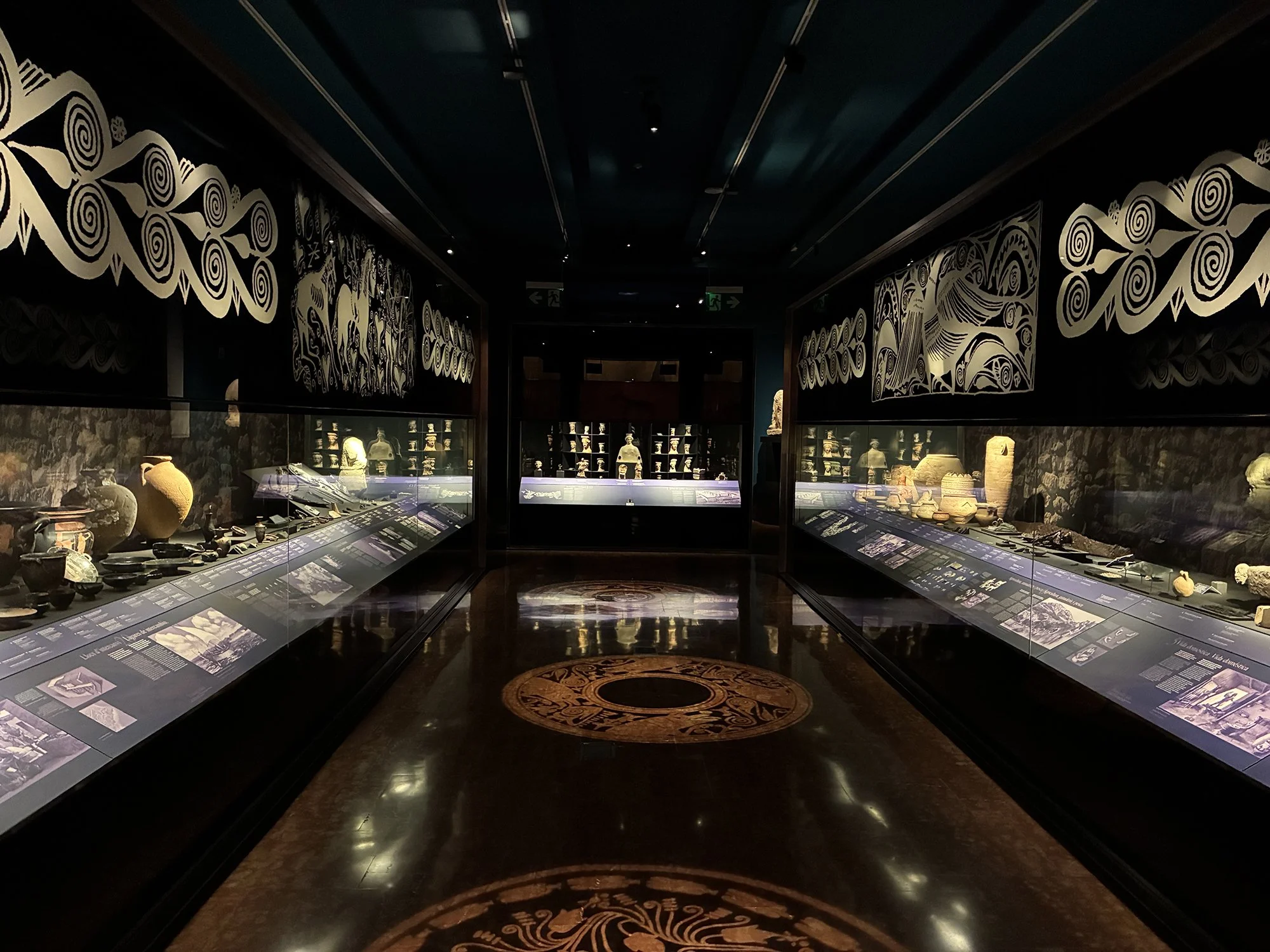
Alicante’s archaeological museum is one of the best in Spain.
Alicante has the right size to explore it easily on foot, discovering its many corners. But if you prefer a different point of view, we suggest a few experiences:
City and Beach Bike Tour, where you’ll ride around the city on a bicycle, discovering several of the city’s highlights.
Guided City Highlights Walking Tour, a 2 hour walking tour to discover the highlights of the city.
You can join this 3-Hour Coastal Catamaran Cruise to see the city and enjoy the Mediterranean Sea.
If you are into art and history, Alicante has some great museums:
MARQ (Archaeological Museum): It’s probably Spain’s second best archaeological museum after Madrid’s. The collection is amazing and it’s displayed in a very modern and immersive way, not just showing you the history of the city, but the science and methods of archaeology
MUBAG (Fine Arts Museum): A beautiful collection of paintings from the middle ages to mid 20th century. Most from Alicante or Valencia born painters.
MACA (Contemporary Art Museum): This beautiful modern building, full of light, houses a great collection of contemporary art. It’s right in front of Basílica de Santa Ana,
What and where to eat in Alicante?
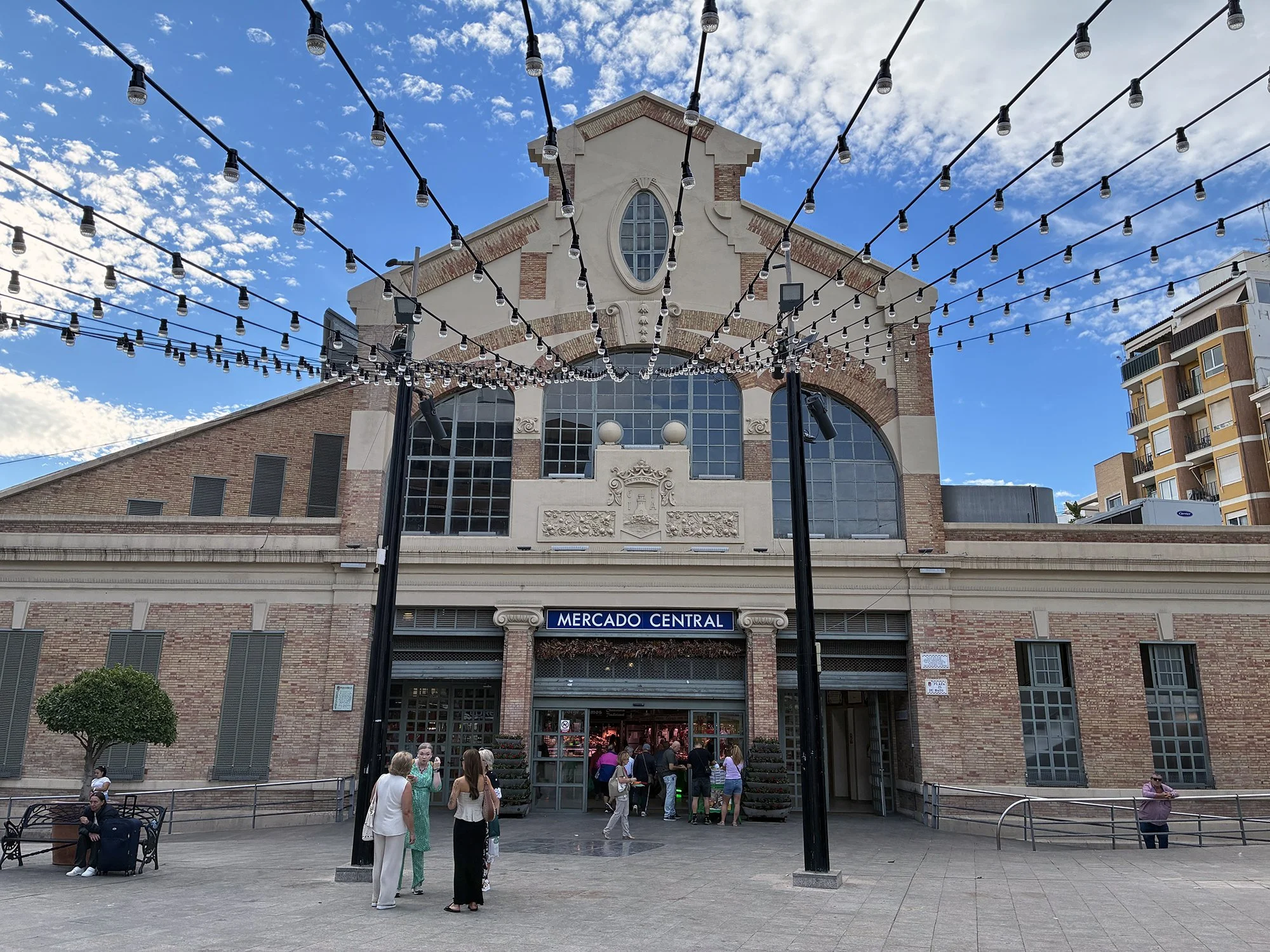
Alicante’s “Mercado Central” is the best place to start tasting the city.
As in every Spanish city, food is one of the key factors when planning a visit, also in Alicante. (You might like our guide to Spanish food). Similar to Valencia, paella and rice dishes are the kings of Alicante cuisine, as well as fresh seafood.
Also, Jijona (in the Alicante province) is the main producer of “turrones” (nougats), the favorite Christmas sweets in Spain.
Turrones are also great presents to take back home.
Also, Comunitat Valenciana’s ice cream industry is the largest in Spain, so you can find many delicious varieties. And the city also has a big “churro” tradition, almost rivaling Madrid or Seville.
Mercado Central is the best place to explore Alicante’s culinary scene. It’s a beautiful modernist building full of actual food stalls, with a few gastrobars scattered around. It’s better to visit in the early morning, when food produce arrives. A real Spanish market attended by more locals than tourists. (Don’t forget to check our blog about markets in Spain).
And here is a list of recommended restaurants from our team and local friends:
Manero: A local institution, a mix of fancy tapas bar and French bistro. They have two locations in the city, both in the old town.
Alba Restaurante: A minimalistic restaurant offering a fusion of Alicante and Italian cuisines. It offers a la carte and tasting menu options.
Nou Manolín: A historical restaurant in the old town. Traditional Alicante food with several paella and rice dishes, as well as seafood and meats.
Baeza & Rufete: The only restaurant in town with one Michelin star. Located between Albufereta and Platja de Sant Joan.
La Taverna del Racó del Plà: Traditional Alicante food with “Olleta Alicantina” and rice dishes. In calle Navas.
Dársena: In the marina, a modern restaurant serving rice dishes, with a great outdoor terrace.
Cabró Gastrobar: In the old town, serving modern fusion cuisine with Asian and Peruvian influences.
Here are some food related tours and experiences that we recommend, for a different approach to the city’s food culture:
Where to stay in Alicante?
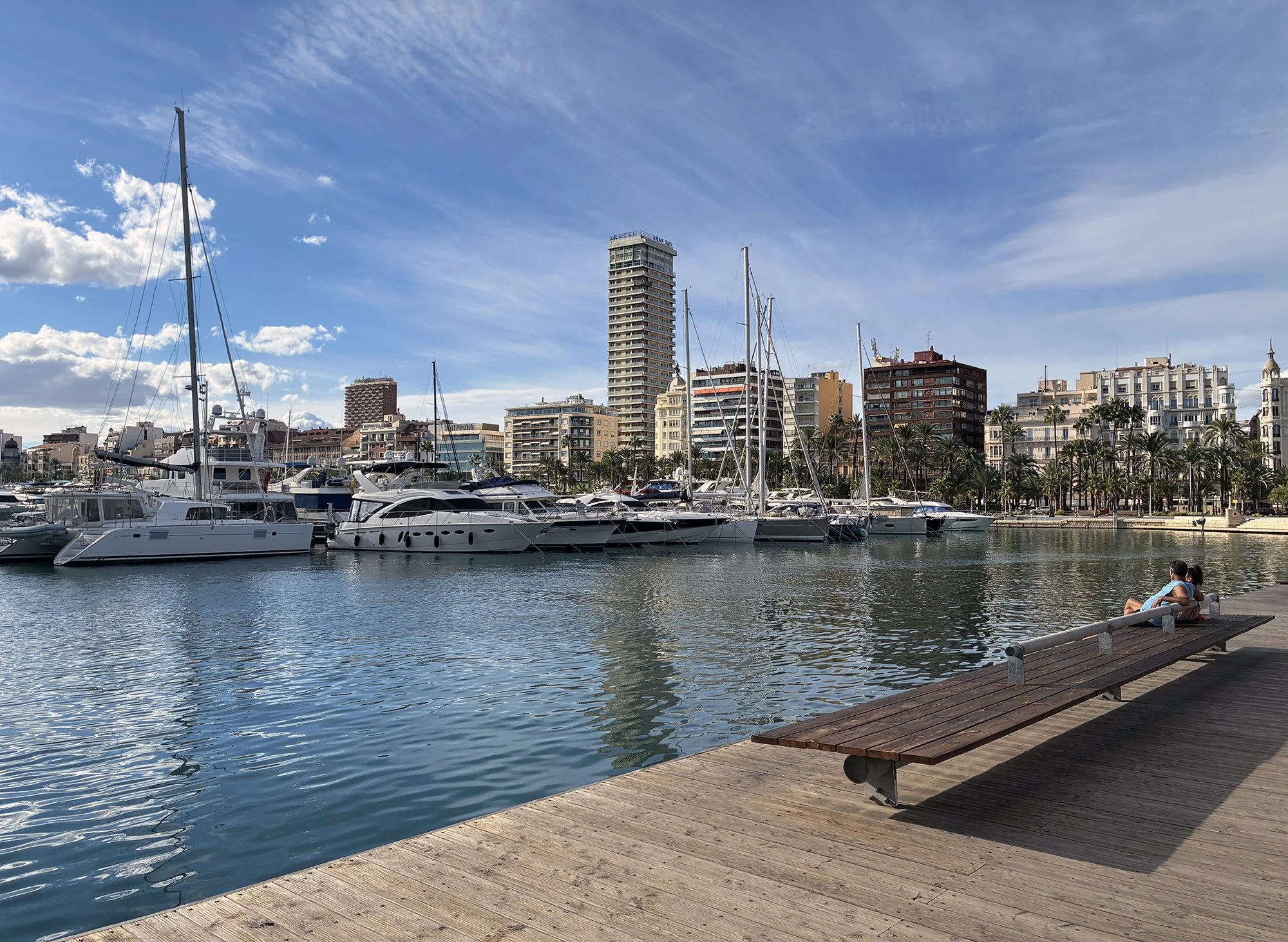
The marina area has many great hotels, as well as dining and entertainment options.
Alicante has a large array of hotels, here is a small selection:
Hospes Amérigo, a Member of Design Hotels. It’s one of the only two 5-star hotels in the city, between the City Hall and the "Explanada”. It has beautifully designed rooms and a great urban spa.
Casa Alberola Alicante, Curio Collection By Hilton. (4-star) Located at the end of the “explanada”, this boutique hotel is located in one of the most beautiful buildings in the city, combined with exquisite modern interion design. Many of the rooms have views to the port.
Hotel Eurostars Mediterranea Plaza. (4-star) If you want to be in the middle of the action, this is your place. The hotel is located right in Plaça del Ajuntament, in the heart of the old town. It has a rooftop with a great view of the old town and the castle.
Palacio Salvetti Suites. (4-star) Right in the old town, this gorgeous palace has been transformed into a stylish boutique hotel.
Hotel Almirante. (3-star) If you want to stay in the beaches area, this modern hotel in the Playa de San Juan area is great for you. Very close to the beach and with a good pool and gardens.
Unique neighborhoods in Alicante
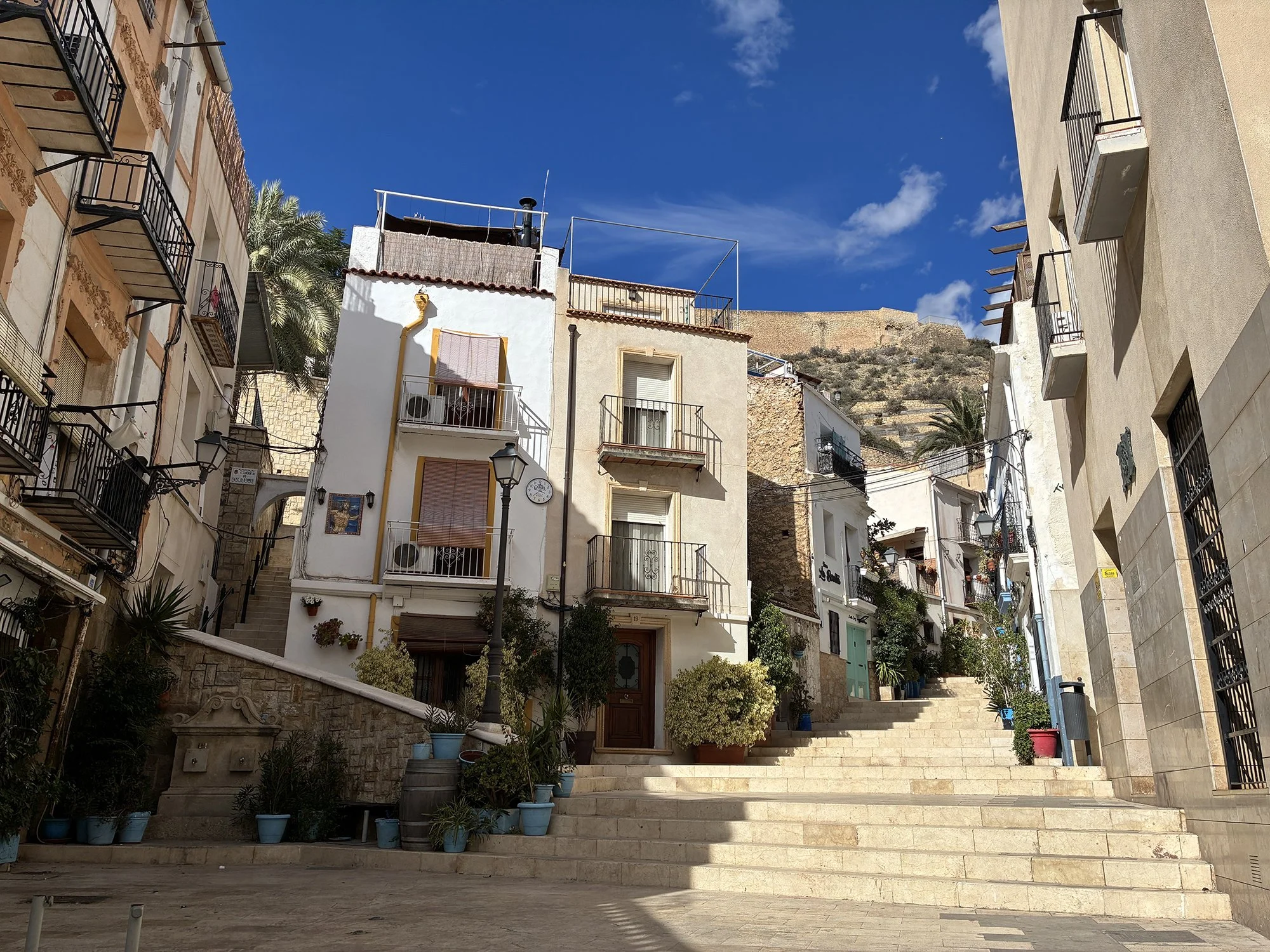
Barrio de Santa Cruz is the most unique neighborhood in Alicante.
Apart from the historical city center and the port, there are some unique neighborhoods in the city worthy exploring and getting lost in:
Barrio de Santa Cruz (or Barri de Santa Creu) is the area at the foot of the mountain beneath the castle. It’s a very Mediterranean neighborhood, with steep alleys and cute plazas. The many flowers in the balconies will remind you of Andalusia. Some highlights in the neighborhood include Plaça del Carme, Ermita de Sant Roc (a tiny hermitage chapel with great views), and “La caseta dels cossiols blaus”, a small house full of blue flower pots (“cossiol” is Valencian for flower pot).
Platja de Sant Joan. It’s the largest and most famous beach area in Alicante. Located at about 5 km from the city center (but connected easily by tramway), it’s a long, beautiful beach (more than 6 km long), with many amenities, restaurants and resorts.
Albufereta. Located between Alicante’s city center and Sant Joan, this beach area was the Roman city of Lucentum, and you can explore some of its remains. It’s a less popular alternative to Sant Joan.
Festivals and events in Alicante
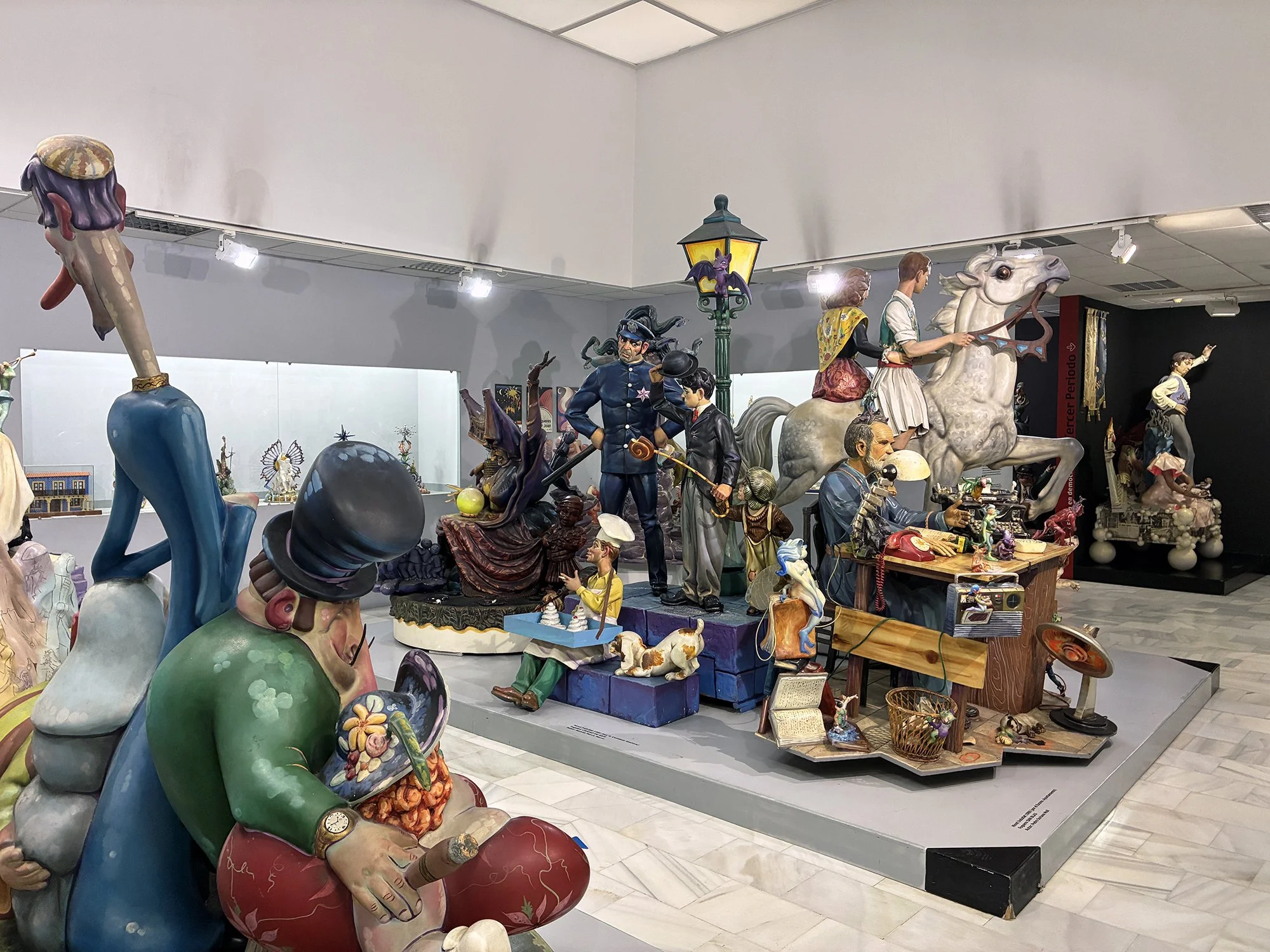
You can get a glimpse of the “Fogueres” festival all year in their dedicated museum.
The most important yearly event in Alicante, and well known all over Spain, is “Fogueres de Sant Joan”. Very similar to the “Fallas” in Valencia, this festival, that takes place around June 23th (St John’s day), is the unofficial start of summer in Spain. It lasts five days, from June 20th to 24th.
The city gets full of “ninots”: giant figures made of wood, cardboard and plaster representing popular characters or fantasies. Every neighborhood builds its own to confront in a fiery (and firey) competition. The winner is saved, but the rest go away in flames at the end of the festival.
And not just that, the whole city gets full of people, drink, food, music and noise, lots of noise, as firecrackers explode all day long. And on nights, the fireworks are said to be the best in Spain.
If you can't visit the city during the festival (it gets very crowded), you can catch a glimpse of it at the small “Museu de les Fogueres”. In this museum (perhaps needing some refresh) you can see the winning “ninot” from every year, so you can admire the incredible craftmanship, sensitivity and lots of humour used to create them.
What are the best day trips from Alicante?
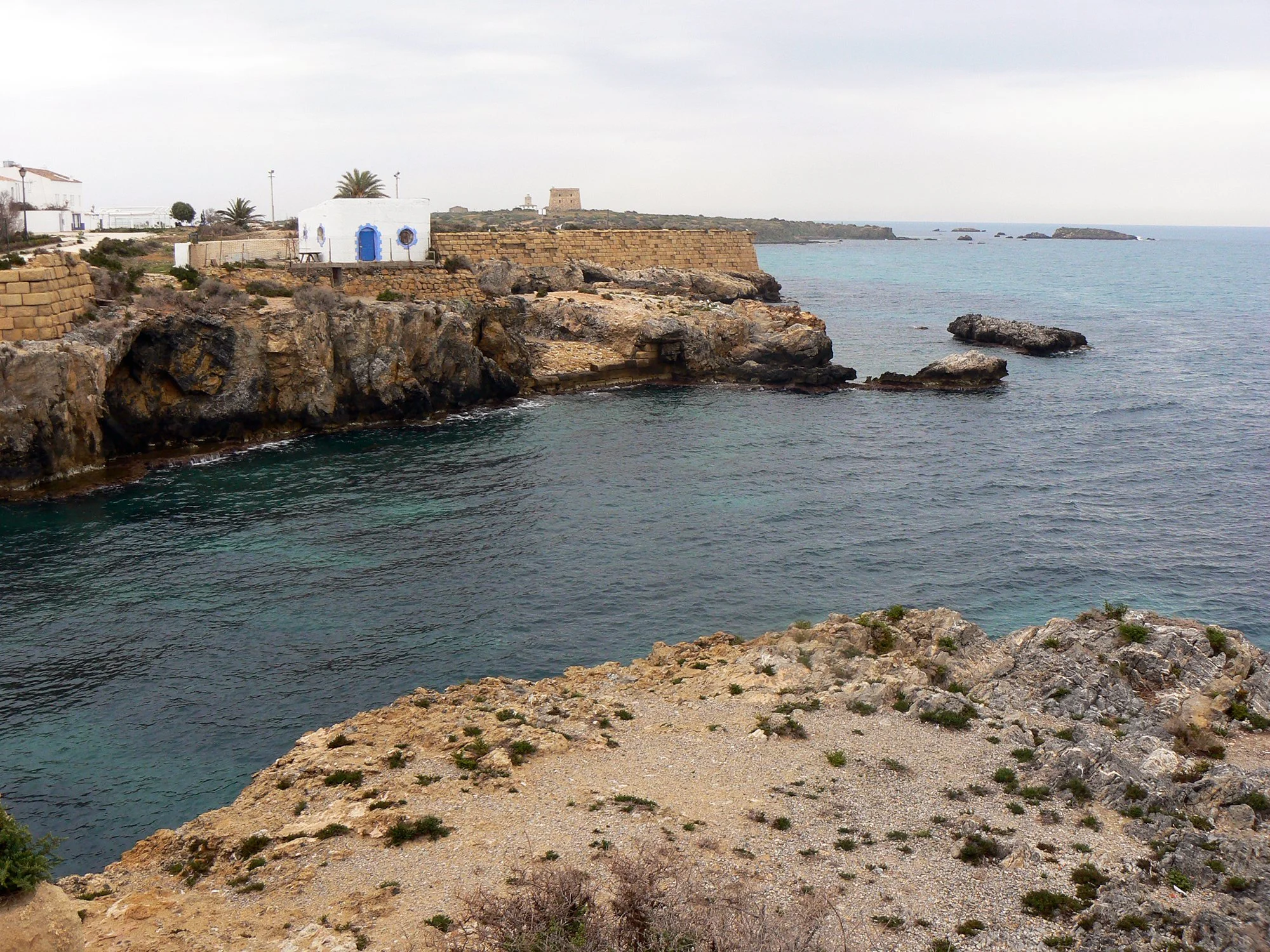
The island of Tabarca is a quiet paradise off season.
Tabarca. This small island is a true unknown in Spain. It has two halves, one with a cute 18th century town and the other full of nature. In the middle there is a small museum telling the fascinating story of the island. There are regular ships from Alicante and Santa Pola.
Benidorm. It’s a place that has to be seen to be believed, and not always in the good sense. This “Manhattan on the Mediterranean” can be loved (like by the countless British tourists that visit it every year) or hated, or both things. But nevertheless, it’s an interesting visit. And it’s connected to Alicante by light rail.
Guadalest. A tiny village on the top of a rock, it’s one of the most beautiful towns in the region, and therefore very visited. Try to go on a weekday to admire the castle and the great views.
Altea. A dual town: On one side a massive beach resort full of buildings, but on the other side, a charming old town with beautiful houses and a thriving nightlife.
Villajoyosa. A beach town famous for its multicolored houses that line its main promenade by the sea. A charming postcard.
Elche. The second largest city in the Alicante province, famous for its Unesco listed “palmeral”, a huge palm trees forest dating from the Islamic times. The high-speed train from Alicante takes less than 20 minutes
Murcia: a really underrated city (Spain’s seventh largest one), full of gorgeous Barque architecture and delicious food. The same high-speed train that goes to Elche takes you to Murcia in an extra 30 minutes.
You can visit those places on your own. Some by public transportation, others with your own car. Or choose from several tours that take you to one or more from Alicante.
Craving to discover Alicante? Let us help you plan your trip!
So that’s it, Spain Less Traveled’s Guide for a Great City Break in Alicante. Alicante blends sun-soaked beaches, rich history, and vibrant culture. From exploring Santa Bárbara Castle to enjoying fresh seafood on the Explanada de España, every corner offers something unforgettable.
Plan your ideal Alicante trip with our custom itineraries and travel guidance.
Ready to start your journey?
Book a FREE 15 minute discovery call
to help you decide which of our professional Spain travel planning services suits you best.